
Mexico City Architecture: The 2-Day Route That Works for Barragan, UNAM, and Anahuacalli
This Mexico City architecture guide shows how to split the city into two workable days so Barragan, UNAM, and Anahuacalli feel connected instead of exhausting.


Mexico City architecture becomes a great trip when you stop pretending it fits into one heroic day
Architecture travelers love Mexico City for good reason, but they often plan it badly. The usual version is a giant list that mixes Barragan, Centro, UNAM, Condesa, and the south side into one supposedly ambitious day. What it actually produces is traffic, rushed museum energy, and the feeling that the city is resisting you.
The problem is not the city. The problem is route shape. Mexico City architecture works best as a two-day plan with one western-and-central day and one southern day. Once you accept that, the trip stops feeling like an argument with geography and starts feeling like one of the richest design weekends in the Americas.
If you only remember one rule from this guide, make it this: book Casa Luis Barragan first, then build everything else around that constraint. It is the most access-sensitive stop in this cluster, and it changes how the rest of your day should look.
| If you have... | Best Mexico City architecture shape | Why |
|---|---|---|
| 2 full days | Day 1 Barragan plus central city, Day 2 UNAM plus Anahuacalli | This keeps transfers sane and preserves energy for the architecture itself. |
| 1.5 days | Barragan first, then choose either Centro or the southern campus-and-museum set | You still protect the hardest booking. |
| 1 rushed day | Do not try all three anchors | The city scale will punish fake efficiency. |
| Architecture-first weekend | Stay in Roma Norte, Condesa, or Juarez | These bases keep both route halves workable. |
Plan your Mexico City architecture trip with real route logic
SearchSpot compares neighborhoods, transfer pressure, and bookable stops so your architecture weekend feels designed instead of improvised.
Plan your Mexico City architecture trip on SearchSpot
Why Casa Luis Barragan should shape the trip
Casa Luis Barragan is not the stop to leave flexible. The museum requires advance tickets, availability is limited, and the site sets a minimum visiting age. That makes it the cleanest itinerary anchor because it tells you what the rest of the day has to be.
Once that is set, the other decisions simplify. If your Barragan slot sits in the morning or early afternoon, you can keep the rest of day one in the western and central city zone. That usually means a lighter transition into Chapultepec-side neighborhoods, then a central finish around Bellas Artes and the historic core if you still have energy.
What you should not do is force UNAM or Anahuacalli onto the same day just because they look conceptually connected. They are connected intellectually. Geographically, they belong to a different day.
Day 1: Barragan and the western-to-central city
Start with Casa Luis Barragan. This is the most disciplined stop of the trip, and it benefits from fresh attention. After that, let the day widen rather than explode. Move through the western side of the city and then into the center if it still feels good. Bellas Artes is a strong central anchor because it gives you a public monumental counterpoint to Barragan's intimacy.
The reason this day works is contrast. Barragan gives you stillness, compression, color, and controlled light. The central city gives you urban theater, public scale, and the historic layering that makes Mexico City's architectural identity feel so specific. You do not need ten stops for that argument to land.
If you are staying in Roma Norte, Condesa, or Juarez, the logistics stay manageable. That is one more reason those neighborhoods are the right bases for most architecture travelers.
Day 2: UNAM, MUAC, and Anahuacalli
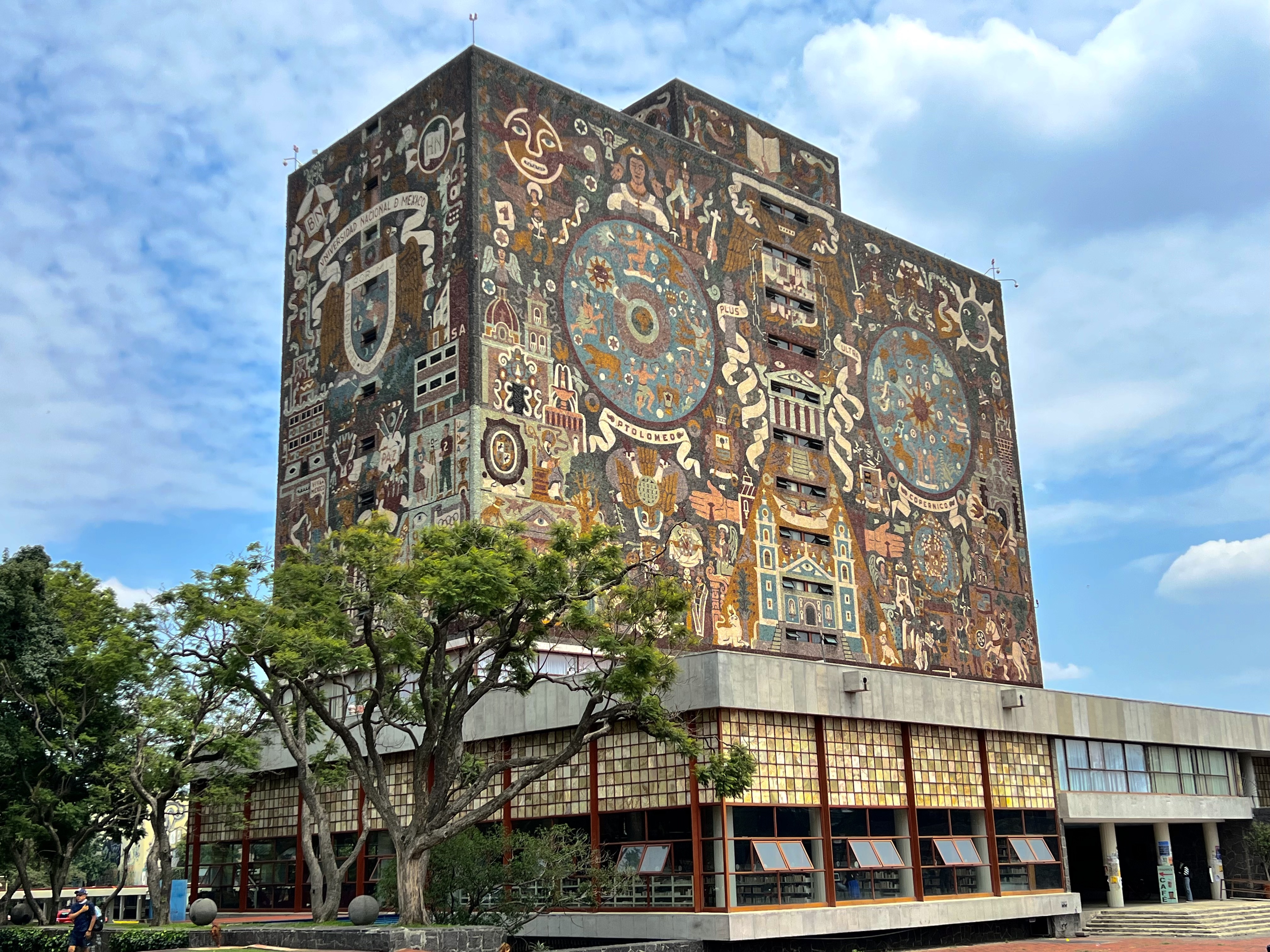
The second day should belong to the south. UNAM is not just a building stop. It is an urban and cultural environment, and it needs time to read properly. MUAC is especially useful here because it gives the day a contemporary hinge with reliable visitor information and a clear visit structure.
Anahuacalli belongs on this same day, not because it is next door in a literal sense, but because the emotional rhythm fits. After the open urban scale of campus, Anahuacalli's volcanic density and symbolic force feel like a deliberate shift instead of a random add-on.
This is also the day where overplanning hurts most. Pick the key experiences and let the south side breathe. You are not trying to prove stamina. You are trying to let the city explain itself.

Where to stay for a Mexico City architecture trip
Roma Norte, Condesa, and Juarez are the strongest default bases because they sit in the middle of the trip's real gravity. They make Barragan feasible, they keep central-city evenings pleasant, and they do not make the southern day feel absurd.
Coyoacan can be lovely, but it is only the right base if the entire trip leans south and slower. For most first-time architecture-focused visitors, it narrows the trip too early. A more central base gives you better optionality.
What architecture travelers usually get wrong here
They confuse thematic connection with route logic
Yes, Barragan, UNAM, and Anahuacalli belong in the same trip. No, they do not belong in the same day.
They leave Barragan until last
That is backwards. The bookable stop should shape the plan, not trail behind it.
They underestimate the value of one strong base
Switching hotels to chase theoretical proximity almost never pays off on a short city trip like this.
My recommendation
Stay in Roma Norte, Condesa, or Juarez. Reserve Casa Luis Barragan as soon as your dates are real. Use day one for Barragan and the western-to-central city, then give day two to UNAM, MUAC, and Anahuacalli. That is the version of Mexico City architecture that feels purposeful instead of punishing.
The city is not too big for architecture travel. It is just too big for lazy route design.
How many reservations to make before you land
The temptation in Mexico City is to overbook because the city is so dense with possibilities. Resist that. For most readers, Casa Luis Barragan is the essential advance reservation. After that, the goal is not to fill every hour with bookings. It is to preserve enough flexibility that traffic, weather, energy, and neighborhood curiosity do not wreck the whole weekend.
That is where people lose the plot. They schedule architecture like a military exercise and then spend the trip recovering from their own itinerary. Mexico City gives back more when you protect a few fixed points and leave the connective tissue open.
Why Roma Norte, Condesa, and Juarez are the smartest first bases
These neighborhoods are not just fashionable defaults. They are strategically useful. They keep your west-central day easy, they give you strong food and coffee options around the architecture, and they do not make the southern day impossible. In other words, they serve the whole trip instead of forcing the whole trip to serve the hotel choice.
Could you stay elsewhere and still have a good time? Of course. But these areas are the most forgiving for first-time architecture travelers who want a balanced city weekend with real design time and normal travel comfort.
Once you base well, the city stops feeling like a puzzle and starts feeling like a sequence. That is the change you are aiming for.
Need help deciding whether to stay central or south for this trip?
SearchSpot compares neighborhood trade-offs, transfer time, and stop density so your Mexico City architecture weekend stays readable from the start.
Compare Mexico City architecture bases on SearchSpot
How many reservations to make before you land
The temptation in Mexico City is to overbook because the city is so dense with possibilities. Resist that. For most readers, Casa Luis Barragan is the essential advance reservation. After that, the goal is not to fill every hour with bookings. It is to preserve enough flexibility that traffic, weather, energy, and neighborhood curiosity do not wreck the whole weekend.
That is where people lose the plot. They schedule architecture like a military exercise and then spend the trip recovering from their own itinerary. Mexico City gives back more when you protect a few fixed points and leave the connective tissue open.
Why Roma Norte, Condesa, and Juarez are the smartest first bases
These neighborhoods are not just fashionable defaults. They are strategically useful. They keep your west-central day easy, they give you strong food and coffee options around the architecture, and they do not make the southern day impossible. In other words, they serve the whole trip instead of forcing the whole trip to serve the hotel choice.
Could you stay elsewhere and still have a good time? Of course. But these areas are the most forgiving for first-time architecture travelers who want a balanced city weekend with real design time and normal travel comfort.
Once you base well, the city stops feeling like a puzzle and starts feeling like a sequence. That is the change you are aiming for.
What to skip if you are tempted to overreach
If you are running short on time, skip quantity before you skip clarity. That means protecting Barragan and one of the larger public urban experiences, then accepting that some ambitious extras belong on another trip. Mexico City is not a city that rewards conqueror energy. It rewards judgment.
That advice matters because architecture travelers often mistake completion for success. In Mexico City, success is when the route feels legible, when the transfer burden stays reasonable, and when the buildings still have enough space around them to speak to each other. Two strong days will usually beat one heroic mess.
Sources checked
Turn this research into a real trip plan
SearchSpot helps you compare stays, routes, neighborhoods, and decision tradeoffs in one planning flow so you can move from reading to booking with more confidence.