
USA Travel Requirements in 2026: Documents You Need Before You Fly
Planning a trip to the United States? Learn everything you need before you fly in 2026, from passports and visas to ESTA, travel insurance, immigration tips, and a complete pre-departure checklist to help you travel with confidence.

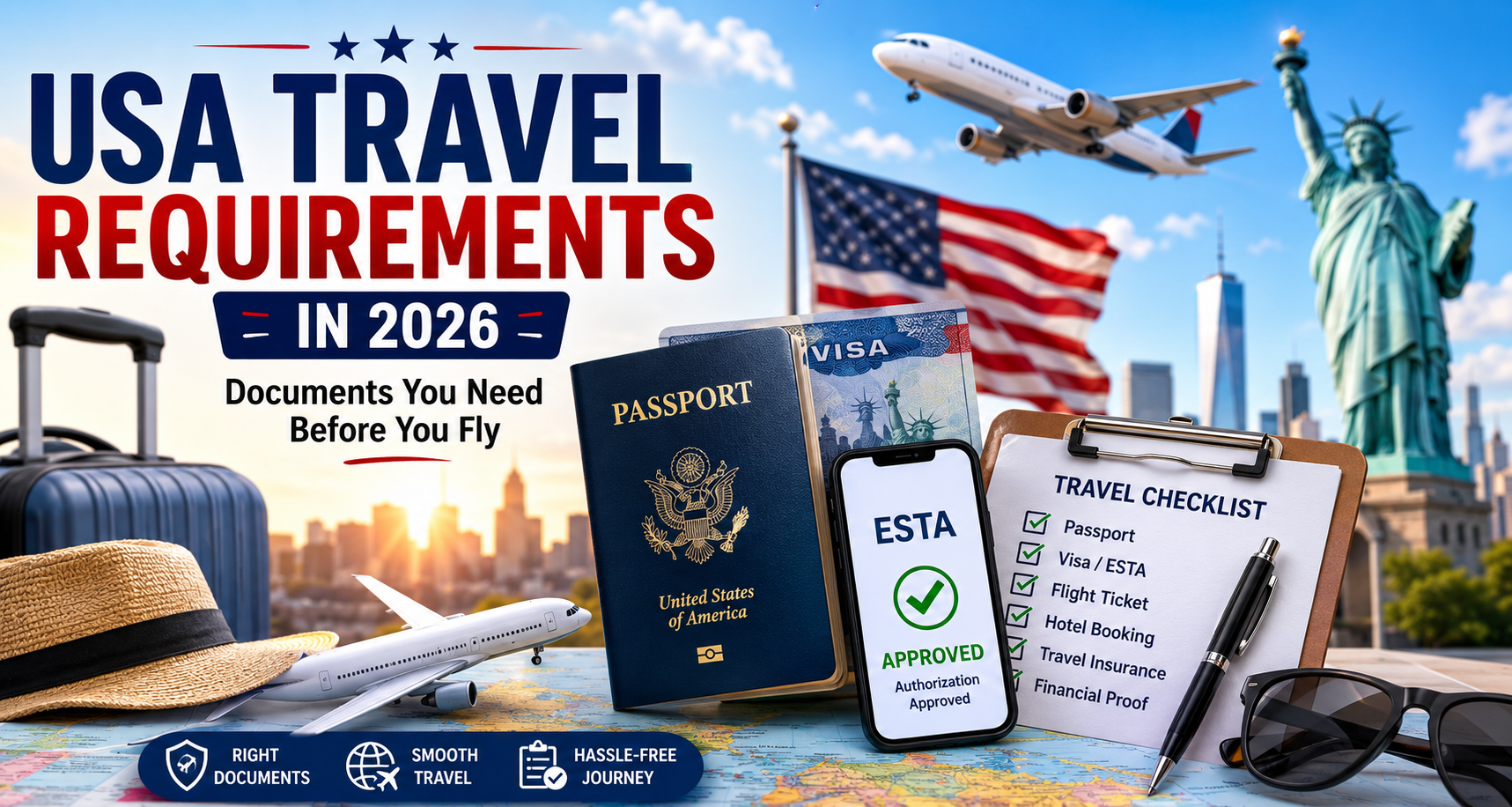
"A missing document can ruin a dream vacation before it even begins. Here's everything you need to travel to the United States in 2026."
Planning a trip to the United States is exciting. Whether you're dreaming of watching the sunset over the Grand Canyon, exploring the streets of New York City, visiting Walt Disney World, or taking an unforgettable road trip along the Pacific Coast Highway, your journey begins long before you board the plane.
Before packing your bags, it's important to make sure your travel documents are in order.
Every year, thousands of travelers experience delays—or even denied boarding—because of missing paperwork, expired passports, or incorrect visa information. Fortunately, avoiding these problems is easier than you might think.
This guide covers everything you need to know about USA travel requirements in 2026, including passports, visas, ESTA, travel insurance, immigration tips, and a complete travel checklist before your departure.
1. A Valid Passport Is Non-Negotiable
The most important document you'll need is a valid passport.
Most international travelers must carry a passport that remains valid for the duration of their stay. However, some countries have additional passport validity requirements, so it's always wise to ensure your passport has at least six months of validity remaining before your trip.
Before you fly, check:
- Passport expiration date
- Blank pages available
- Passport condition (damaged passports may be rejected)
If your passport expires soon, renew it before booking expensive flights.
2. Do You Need a Visa?
Not everyone needs a U.S. tourist visa.
Your requirements depend on your nationality.
You may need:
✔ B1/B2 Tourist Visa
Many travelers—including those from India—must apply for a B1/B2 Visitor Visa before entering the United States.
This visa is commonly used for:
- Tourism
- Visiting family
- Medical treatment
- Business meetings
- Conferences
Visa appointments may take several weeks or months, so plan well in advance.
✔ ESTA Authorization
Citizens of Visa Waiver Program countries don't need a traditional visa for short visits.
Instead, they apply online for an ESTA (Electronic System for Travel Authorization).
ESTA approval is usually quicker than a visa but should still be completed before booking your flight.
3. Keep Your Flight Confirmation Handy
Although immigration officers may not always ask for it, carrying your return or onward flight confirmation is highly recommended.
It demonstrates that you intend to leave the United States before your authorized stay ends.
Digital copies are convenient, but printed copies can be helpful if your phone battery dies or internet access is unavailable.
4. Hotel Reservations
Immigration officers may ask where you'll be staying.
Have confirmation of:
- Hotel bookings
- Airbnb reservations
- Vacation rentals
- Family or friend's address (if staying with relatives)
Knowing your first night's accommodation makes the arrival process smoother.
5. Proof of Financial Support
While not always requested, travelers should be prepared to show they can support themselves during their stay.
Examples include:
- Recent bank statements
- Credit cards
- Cash
- Sponsorship letters (if someone else is paying)
The goal is simply to demonstrate that you can cover your travel expenses.
6. Travel Insurance Is Worth It
Travel insurance isn't mandatory for most visitors, but it can save you thousands of dollars.
Healthcare in the United States is among the most expensive in the world.
A simple emergency room visit can cost hundreds—or even thousands—of dollars.
A good travel insurance policy should cover:
- Medical emergencies
- Hospitalization
- Lost baggage
- Flight delays
- Trip cancellation
Think of it as protection for your vacation and your wallet.
7. Carry Your Visa Documents
If you're traveling on a B1/B2 visa, keep these documents easily accessible:
- Passport
- Visa
- Flight itinerary
- Hotel confirmations
- Invitation letters (if applicable)
- Conference registration (business travelers)
- Supporting travel documents
Organizing everything in a travel folder can make airport procedures much easier.
8. Traveling With Children
Families should carry additional documentation when traveling with children.
Depending on your situation, you may need:
- Child's passport
- Birth certificate
- Consent letter (if one parent isn't traveling)
- Adoption documents (if applicable)
Check your airline's specific requirements before departure.
9. Customs Declaration
Before entering the United States, you may need to declare certain items.
These include:
- Large amounts of cash
- Agricultural products
- Certain food items
- Plants
- Animal products
Declaring an item doesn't necessarily mean it will be confiscated—it simply helps customs officials assess whether it's permitted.
When in doubt, declare it.
10. Immigration Interview Tips
Meeting a U.S. Customs and Border Protection officer can feel intimidating, but it's usually straightforward.
Answer questions honestly and confidently.
Typical questions include:
- Why are you visiting?
- How long will you stay?
- Where will you stay?
- What places are you planning to visit?
- When is your return flight?
Having your documents organized helps make this process quick and stress-free.
Common Mistakes Travelers Make
Many travel issues happen because of simple oversights.
Avoid these common mistakes:
❌ Passport expires soon
❌ Forgetting visa approval
❌ No return ticket
❌ No hotel confirmation
❌ Ignoring travel insurance
❌ Packing prohibited items
❌ Arriving at the airport without printed copies of important documents
A few minutes of preparation can save hours of frustration.
Your USA Travel Checklist
Before heading to the airport, make sure you have:
✅ Valid passport
✅ Tourist visa or ESTA approval
✅ Return flight ticket
✅ Hotel reservation
✅ Travel insurance
✅ Proof of financial support
✅ Emergency contacts
✅ Copies of important documents
✅ Credit/debit cards
✅ Mobile charger and power adapter
Save this checklist on your phone—or print it out before your trip.
Planning Your USA Trip Starts Here
Once your travel documents are ready, the exciting part begins.
Finding the best flights.
Choosing the right hotel.
Comparing travel options.
Building an itinerary that fits your budget.
That's where SearchSpot comes in.
Instead of opening dozens of browser tabs, SearchSpot helps you discover and compare flights, hotels, and travel options in one place, making it easier to focus on the journey ahead rather than the logistics.
Because planning your trip should feel exciting—not overwhelming.
Final Thoughts

The United States welcomes millions of international visitors every year, but a successful trip begins with preparation.
Double-check your passport.
Confirm your visa or ESTA.
Organize your documents.
Carry travel insurance.
Keep copies of everything.
Once that's done, you're free to focus on what really matters—creating unforgettable memories.
Whether you're exploring Times Square, hiking through Yosemite, driving Route 66, or cheering at the FIFA World Cup 2026, being prepared means your adventure can begin the moment you land.
Safe travels!
Turn this research into a real trip plan
SearchSpot helps you compare stays, routes, neighborhoods, and decision tradeoffs in one planning flow so you can move from reading to booking with more confidence.