
Oregon Whale Season: Best Months, Best Bases, and When Shore Viewing Beats the Boat
Oregon whale season is better than most travelers realize, but only if you stop treating the winter migration as the only window that matters and plan around the right coast base.

Oregon whale season looks easy until you realize there are really three different trips hiding inside the same keyword. One traveler wants the drama of the big migration. Another wants the easiest possible chance of seeing whales from shore without paying for a boat. A third wants the version that works with kids, unpredictable weather, and one clean coast base. If you do not separate those three goals, it is very easy to show up on the right coastline at the wrong moment and call the whole thing underwhelming.
The short answer is this: late March through May is the smartest migration window if you want movement, volunteer spotting help, and a real chance of seeing multiple northbound gray whales from shore. June through mid-November is the easier, lower-stress choice if you want Oregon’s resident gray whales close to the central coast. Mid-December through mid-January can work, but it is more exposed to rough weather and it is often overvalued simply because it sounds dramatic.
The decision that matters first: migration spectacle or easier sightings?
Oregon State Parks is unusually clear about this. The state frames whale watching as a year-round activity, but not all months solve the same problem. Winter brings the southbound migration from mid-December through mid-January. Spring brings northbound whales from late March into June. Then summer and fall shift the conversation toward the Pacific Coast Feeding Group, the resident gray whales that stay close to Oregon’s central coast to feed.
That last point is where a lot of first-timers make the wrong call. People hear “migration” and assume that must be the peak trip. In practice, the resident period can be the more satisfying version for travelers who value low-friction sightings over bucket-list language. You are not chasing a narrow week. You are basing near a stretch of coast where whales routinely feed close enough to make land viewing genuinely realistic.
| Timing window | What you are really optimizing for | What can disappoint you |
|---|---|---|
| Mid-December to mid-January | Southbound migration energy and holiday-season whale watch events | Winter weather, rougher visibility, and a trip that can feel more exposed than magical |
| Late March to May | Northbound migration, calves in the mix, staffed viewpoints during the spring watch week | Whales are still moving, so this is less “one reliable hotspot” and more “good timing plus patience” |
| June to mid-November | Resident gray whales near the central coast, easier shore-based spotting, calmer overall trip shape | You lose the “huge migration” story, even though the actual viewing can be easier |
Where to base if whales are the point of the trip
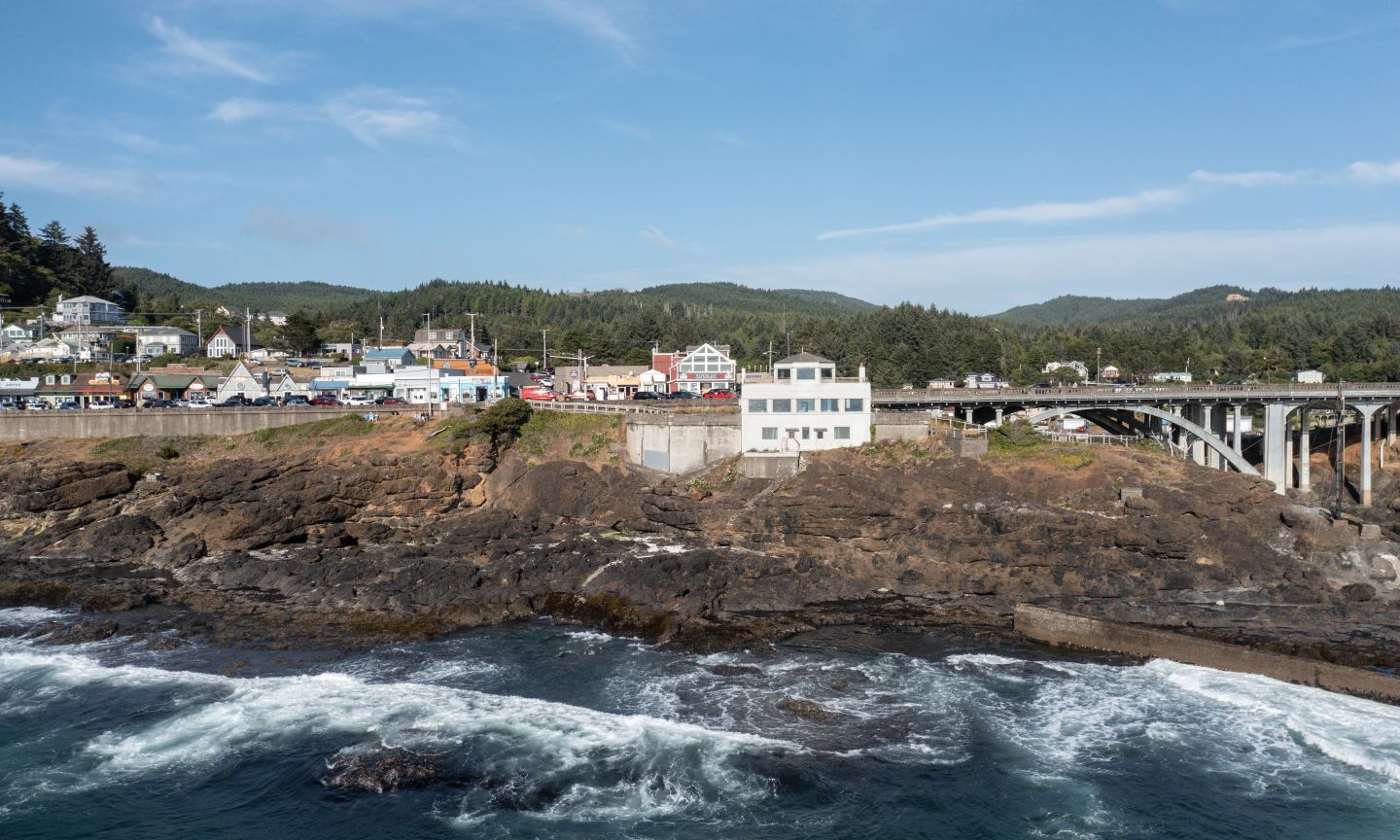
For most people, Depoe Bay wins. The Whale Watching Center sits right on the seawall, Oregon State Parks staffs it for spotting help, and the town is built around the simple truth that a lot of people come here to see gray whales without turning the whole day into a marine expedition. If you want the most straightforward shore-based whale base in Oregon, this is it.
Newport is the better second choice if you want more restaurants and a broader coastal town feel. It is easier to justify for a full weekend, especially if your group will only spend part of the trip actively whale watching. But if whales are the main objective, Newport is usually the compromise and Depoe Bay is the cleaner decision.
If you want the postcard version of an Oregon whale trip, add Yaquina Head, Boiler Bay, Cape Foulweather, or the viewpoints around Yachats and Cape Perpetua to the plan. Those are not better than the central coast core, they are the scenic extensions that make a two-night trip feel complete.
Plan your whale watching trip with a better shot at a real sighting
SearchSpot compares destinations, seasons, and trip logistics so you can choose a whale-watching plan that actually makes sense.
Plan your Oregon whale trip on SearchSpot
When shore viewing is actually smarter than booking a boat
This is the part many travel guides avoid because tours are easier to monetize than honesty. Oregon is one of the rare whale trips where shore viewing is not a fallback. It can be the right primary plan. That is especially true during spring watch periods and the resident gray whale months on the central coast.
If you are traveling with kids, older relatives, or anyone who gets motion sick quickly, shore-first planning is often the higher-confidence move. You keep flexibility, you avoid committing your best weather window to one departure slot, and you can stack multiple viewpoints over two days instead of betting everything on one ride.
Book a boat when one of these is true: you only have a short window, you care about being closer more than you care about overall comfort, or you are traveling outside the easiest resident-shore periods and want to increase your odds. If you do book a boat, choose the one that gives you enough time on the water without turning the day into an endurance test. Oregon’s draw is that you do not always need the boat to justify the trip.
The month-by-month reality
Mid-December to mid-January
This is the famous southbound migration window. Thousands of gray whales pass the coast, and the official whale watch program leans into it for good reason. But winter on the Oregon coast is still winter on the Oregon coast. If your group hates wind, rain, or low-visibility waiting, this is not automatically the best trip.
Late March to May
This is the smartest migration answer for most first-timers. You still get the excitement of movement, but the trip usually feels less brittle than the winter window. If you want volunteers stationed at viewpoints, current counts, and a better chance of pairing whale days with enjoyable coastal walking, spring is the cleanest answer.
June to mid-November
This is the underrated season. The resident gray whales make the central coast feel far more reliable than people expect, especially around Depoe Bay. If you want a coast weekend where whales are genuinely likely but not the only thing that has to work, this is the best overall travel shape.
How many days improve your odds?
Two nights is the minimum smart shape. One night can work if you live nearby and the forecast is clean. But if you are driving any real distance, give yourself at least two mornings and one flexible afternoon. Whale trips improve when you can react to visibility, wind, and local chatter instead of forcing one single viewing attempt to carry the whole plan.
If whales are the headline, do not overpack the itinerary. Central coast viewpoint-hopping, a good meal, and another scan at dusk is a better Oregon trip than pretending you also need to cram in every detour from Astoria to Brookings.
My recommendation
If this is your first Oregon whale trip, base in Depoe Bay and choose between two clean versions. For migration energy, go in late March through May. For the easiest low-stress sightings, go in summer or early fall when the resident grays are working the central coast. Newport is your backup if the group needs more town and less single-purpose focus.
The mistake to avoid is assuming winter is the only time that counts. Oregon whale season is not one short spectacle. It is a year-round planning problem with different winners depending on whether you want motion, simplicity, or the highest chance of a satisfying shore-based experience.
Plan your whale watching trip with a better shot at a real sighting
SearchSpot compares destinations, seasons, and trip logistics so you can choose a whale-watching plan that actually makes sense.
Compare Oregon whale timing on SearchSpot
Sources checked
Turn this research into a real trip plan
SearchSpot helps you compare stays, routes, neighborhoods, and decision tradeoffs in one planning flow so you can move from reading to booking with more confidence.