
Fontainebleau Bouldering: Best Time, Where to Stay, and Car vs Train

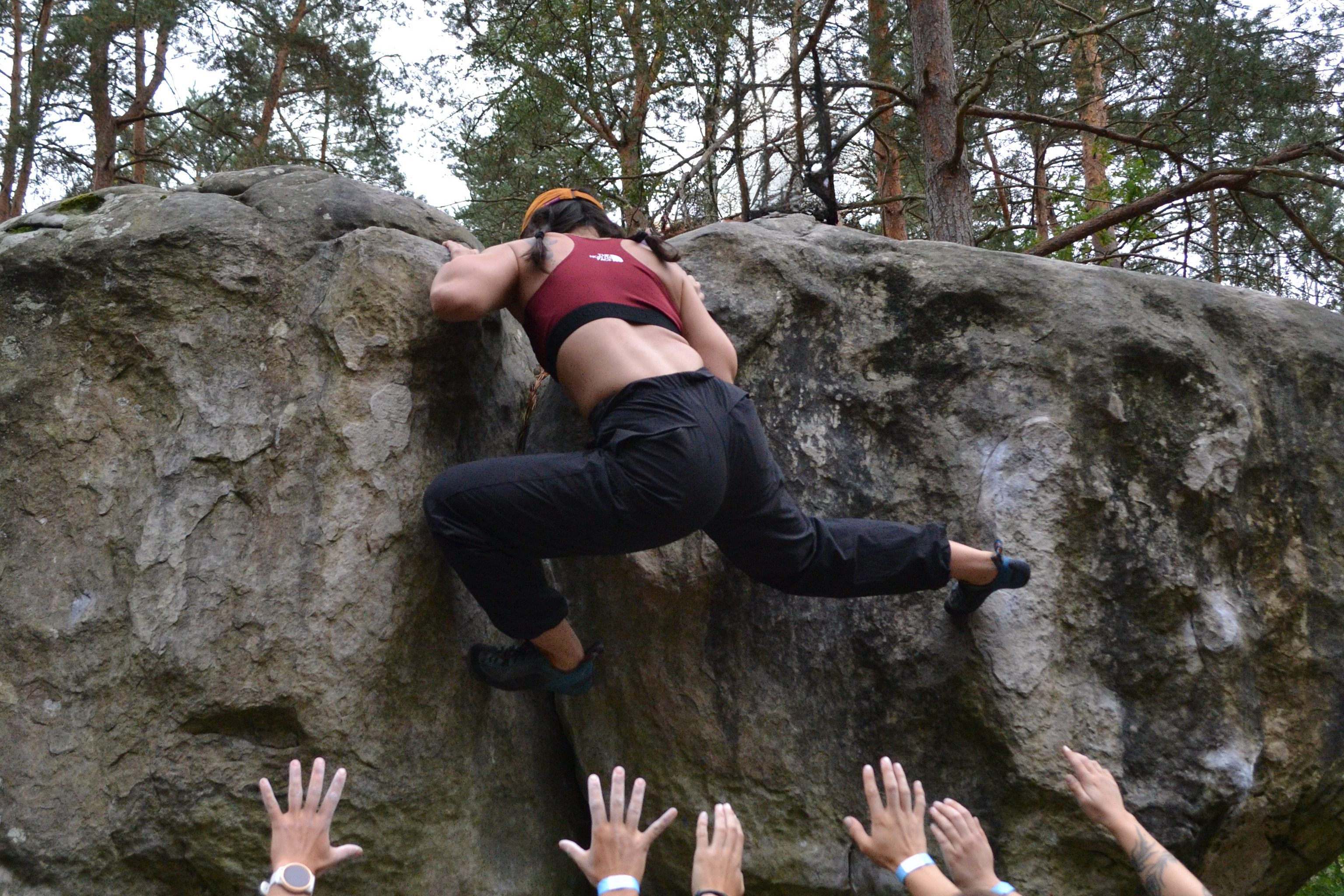
Fontainebleau bouldering is one of the easiest climbing trips in Europe to underestimate. People hear that it is close to Paris and assume the rest sorts itself out. Then they arrive without a car, sleep somewhere pretty but badly placed, and lose climbing time to wet sandstone, spread-out sectors, or transport friction that looked charming on paper. Font is world-class, but it is not a one-village, one-crag destination. It is a forest system.
The climbers who love Fontainebleau most are usually the ones who make peace with that early. They know the trip is not just about the blocs. It is about friction, sector choice, weather, landing quality, transport, and whether the base actually matches the style of days you want to build.
| Question | Best call | Why it wins |
|---|---|---|
| Best season | Autumn through spring, with conditions chosen day by day | You get the best balance of friction and usable temperatures. |
| Best base | La Musardière or a climber-friendly gîte if you want forest focus, Fontainebleau town if you want train convenience | Base choice changes transport and sector access more than people expect. |
| Best transport | Car for freedom, train for selective first trips | You can do Font by train, but a car opens the forest properly. |
The fast decision
Fontainebleau is best for boulderers who care about movement, conditions, and spending full days in the forest. It is especially good for mixed-level groups because the area offers dense options, circuit culture, and enough variety that everyone can usually find something meaningful on the same day.
It is less ideal if you hate transport decisions, want guaranteed dry rock, or prefer a destination where everything important sits under one obvious base. Font rewards patience and flexibility more than brute-force itinerary certainty.
When Fontainebleau bouldering is actually best
Autumn is the easiest all-around answer
If you want one simple recommendation, autumn is it. The air cools down, friction improves, and the forest still feels comfortable enough for long days. This is the season that usually gives the best balance between performance and pleasure.
Winter is best for friction, but only if you actually like winter
Hard climbers often love winter because the grip can be superb. That does not automatically make it the best trip for everyone. Cold, shorter days, and recent rain can still complicate the rhythm. If you are going to Font to try hard and you are happy living around the weather, winter is excellent. If you are going for a relaxed first trip, autumn or spring is usually cleaner.
Spring is strong, but moisture management matters
Spring can be beautiful and productive, especially when conditions line up. The tradeoff is that recent rain matters a lot on sandstone. Font is not a destination where you bluff your way through damp rock. If the weather is mixed, you need a plan for sector choice and rest-day flexibility.
Summer is possible, not ideal
People do climb in summer, especially in shade or at friendlier times of day, but summer is not the reason most climbers travel here. If you are booking a dedicated bouldering trip, the cooler seasons are simply better.
| Season window | What works | Main downside |
|---|---|---|
| Autumn | Best all-around answer | Popular for exactly that reason |
| Winter | Top friction for trying hard | Cold and weather-sensitive |
| Spring | Beautiful balance of comfort and climbing | Rain can reshape sector choices |
| Summer | Selective sessions in shade | Not the strongest dedicated-trip window |
Where to stay, and which base actually fits the trip
La Musardière is the clean forest-first answer
If you want a proper bouldering trip, La Musardière keeps you close to the Trois Pignons side of the experience and makes the forest feel central. This is the best call for climbers who want simple days, sandy landings, and less town friction.
Fontainebleau town is the best train-based answer
If you are arriving from Paris and keeping the trip lighter, staying in or near Fontainebleau town makes a lot of sense. It keeps trains, food, and recovery simple. The tradeoff is obvious: you lose some direct access ease to the wider spread of sectors, especially if you remain car-free the whole trip.
Gîtes and group rentals are often the smartest option
For small teams or longer stays, a climber-friendly gîte can be the best overall answer. You get room to dry gear, cook, spread out pads, and move through the forest with less daily reset energy. In a place this sprawling, that matters.
Plan your climbing trip with fewer access surprises
SearchSpot compares climbing destinations, stay strategy, and route logistics so you can pick a crag trip that actually works on the ground.
Plan your Fontainebleau bouldering trip on SearchSpot
Car versus train, and which choice actually costs more
Train is viable for a first trip, but selective
One of Font’s great advantages is that you can come from Paris by train. If you are happy focusing on a narrower slice of the forest and building slower days, this can be a genuinely good trip. The mistake is thinking train access gives you the full Fontainebleau experience automatically.
A car is what turns Font from possible into flexible
The sectors are spread out enough that a car dramatically improves your options. It lets you choose drier sectors after weather, move away from crowds, match the day to your grade and style, and avoid sinking energy into transit logistics. If the trip is primarily about maximizing climbing quality, the car usually wins.
Wet sandstone ethics are the trip rule that matters most
Do not climb on wet or damp rock in Fontainebleau. The sandstone is too fragile for that and the damage is not theoretical. This is one of the defining ethical lines of the destination. If it rained, your day needs to be built around sectors that are actually dry enough, or around not climbing yet. That is part of the deal here.
This also shapes where transport matters. A car gives you more options when some parts of the forest are dry faster than others. A train-only trip can still be great, but it leaves you with less condition flexibility.
Who Fontainebleau fits best
Font is best for climbers who like technical movement, footwork, and long days spent solving many kinds of problems rather than chasing one exact route style. It is superb for mixed-level groups and especially strong for climbers who enjoy exploring sectors rather than sitting at one cliff all weekend.
It is less perfect for someone who wants maximum certainty and minimum weather sensitivity. Font gives back a lot, but it expects some patience in return.
The recommendation
Choose Fontainebleau when you want one of the most distinctive bouldering trips in the world and are willing to plan around conditions instead of fighting them. Go in autumn for the cleanest overall answer. Use winter if friction is the priority. Stay in the forest if you want a climbing-first trip, or in town if train simplicity matters more. Rent a car if you want the forest to open up properly.
If you do that, Font feels expansive and addictive. If you under-plan it, the same destination can feel strangely fragmented. The difference is not the rock. It is the trip design.
Plan your climbing trip with fewer access surprises
SearchSpot compares climbing destinations, stay strategy, and route logistics so you can pick a crag trip that actually works on the ground.
Turn this research into a real trip plan
SearchSpot helps you compare stays, routes, neighborhoods, and decision tradeoffs in one planning flow so you can move from reading to booking with more confidence.