
Cycling Holidays in the Loire Valley: Why Flat Does Not Mean Boring, and Why the Route Works So Well
The Loire Valley is one of the best cycling trips in France for riders who want low-stress mileage without sacrificing atmosphere. This guide explains who the route suits and how to plan it properly.

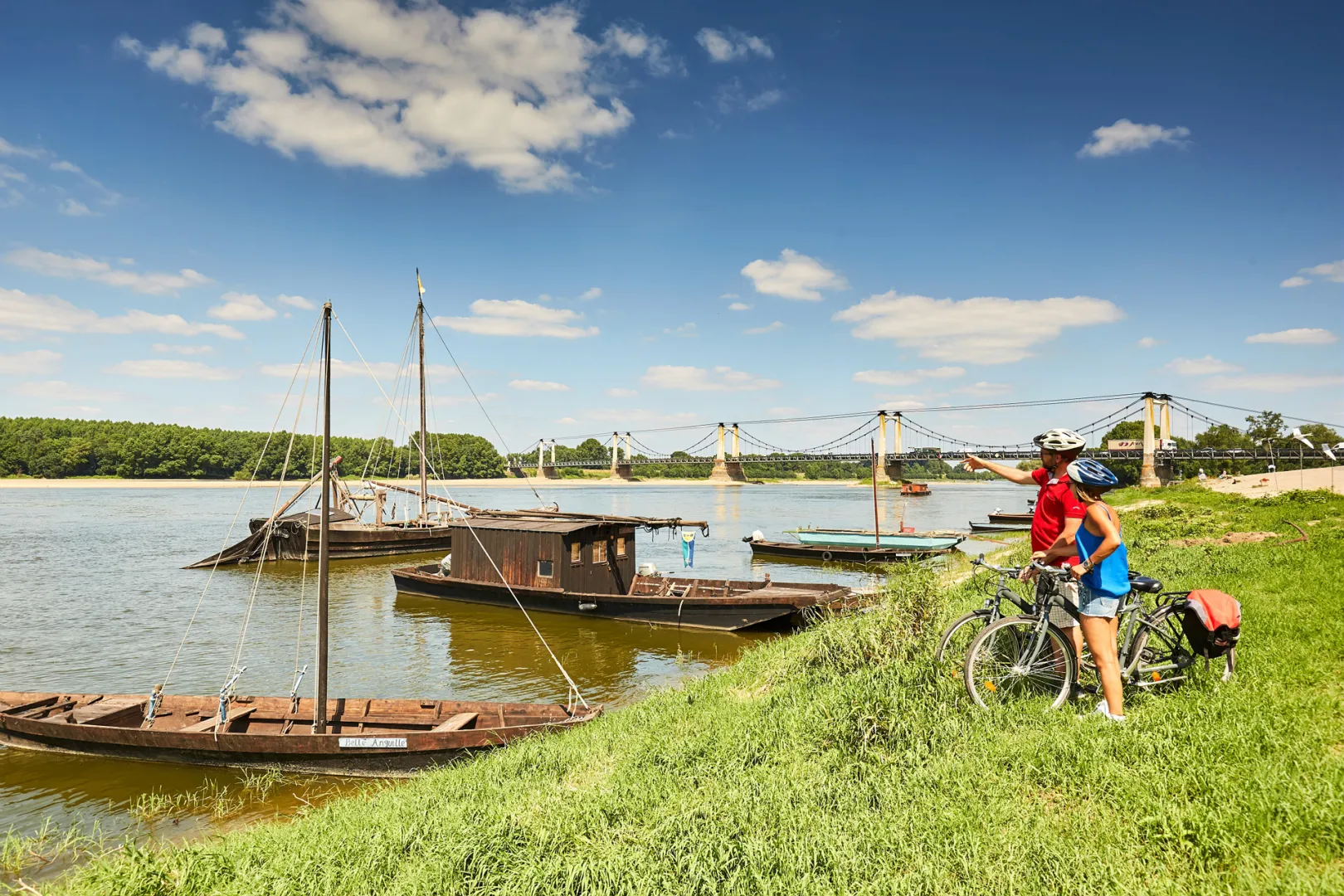
People still talk about flat cycling like it is a consolation prize. That mindset ruins a lot of good trip planning. Cycling holidays in the Loire Valley work precisely because the route does not spend the whole week trying to prove how hard it is. The valley gives you mileage that feels calm, towns that are useful rather than decorative, and enough château, wine, and riverside atmosphere that the riding supports the trip instead of overwhelming it.
That makes Loire one of the best answers in Europe for riders who want a genuine cycling holiday rather than a disguised training camp. It is especially strong for couples, first-time self-guided riders, and anyone who wants to arrive home feeling satisfied rather than flattened.
| Question | Loire answer | Why it matters |
|---|---|---|
| Do you need to be a strong climber? | No | The route wins on flow, not on heroics. |
| Is it good for first self-guided riders? | Yes | The terrain and town spacing make mistakes less costly. |
| Will experienced riders be bored? | Not if they want a holiday, not a fitness test | The trip pays back through scenery, food, and sustainable daily rhythm. |
The quick decision
Choose Loire Valley if you want easy route logic, rewarding towns, and a week where cycling and sightseeing can coexist without fighting each other. Skip it only if you need big climbs to feel engaged. The route is strong because it stays useful day after day.
Plan your cycling holidays in the Loire Valley with cleaner daily mileage decisions
SearchSpot compares routes, bases, and trip logistics so your cycling holiday works on the road, not just on a map.
Plan your cycling trip on SearchSpot
Why the Loire works better than many harder cycling trips
The valley is one of the few places where the route design, the tourism infrastructure, and the everyday rider experience all line up. You are not forcing long stages just to reach the next viable stop. You are not depending on one giant climb to justify the destination. Instead, the trip becomes a sequence of manageable days that leave room for detours, tastings, château visits, and actual recovery.
That is why Loire feels so good in practice. The week has margin. A route with margin is easier to enjoy and easier to rescue when weather, fatigue, or bike issues show up.
Who the Loire Valley suits best
It suits first-time self-guided riders, couples with different strengths, riders returning from injury, and experienced cyclists who want a cultural trip that still happens by bike. It also suits travelers who do not want to spend the entire week talking about watts. That is not a joke. Some trips become emotionally narrower the harder they get. Loire stays open.
If your identity as a rider depends on suffering, this may not be your dream week. If you care about a trip working cleanly, it is one of the smartest routes in Europe.
How to think about daily distance
The valley rewards restraint. Riders get into trouble when they see forgiving terrain and assume they should just keep adding mileage. The better move is to use the easy terrain to buy time for stops, longer lunches, château visits, and lower fatigue. A clean 45 to 70 kilometer day in Loire often feels richer than a forced 95.
This is the underrated advantage of the route. The easier terrain gives you options, which means you can shape the trip around curiosity rather than constant survival.
One base or point to point?
Point-to-point is the classic answer because the valley links towns so well. But one-base or two-base versions can work beautifully if your group values unpacking less and exploring more. Support or luggage transfer can absolutely improve the trip, yet it is not mandatory in the way it might be on more complex routes. Loire is forgiving enough that a simpler setup still succeeds for organized travelers.
Bring your own bike or rent locally?
Loire is one of the easier arguments for renting, especially if you are pairing the route with rail travel, château visits, or a broader French trip. The terrain is forgiving, the trip is less fit-critical than a mountain week, and reducing luggage friction can make the whole holiday cleaner. Bringing your own bike still makes sense if comfort and familiarity matter more than transport simplicity, but Loire does not force the issue the way a harder road-cycling destination might.
The same principle applies to luggage transfer. It is nice, often worth it, but not always necessary. The valley gives you options, which is exactly why so many riders enjoy it. You can add convenience without needing to buy your way out of a fundamentally awkward route.
How to stop château overload from flattening the trip
One of the odd mistakes riders make in Loire is assuming every famous stop deserves equal time. They end up half-riding and half-sightseeing without enjoying either properly. The better move is to decide which days are ride-first and which are château-first. Flat terrain makes that possible. You can have a shorter ride and a proper visit without the day collapsing into a time-management problem.
That is another reason the route is so good for couples and small groups. The trip can absorb different interests without feeling compromised.
A realistic Loire week
A good Loire week rarely needs heroic daily mileage. Think of it as a chain of strong but manageable days with room to stop well. One longer ride day, two medium days, one shorter culture-heavy day, and one flexible closer is usually better than trying to prove the route is harder than it is. The valley is enjoyable because it stays generous. Lean into that instead of fighting it.
The riders who love Loire most are usually the ones who stop trying to make flat terrain sound epic. They let the route be what it is: practical, beautiful, and very easy to keep enjoying. That is not a consolation prize. That is an unusually strong trip design.
Why Loire is so good for couples and mixed-strength friends
The valley makes compromise feel intelligent rather than second best. Stronger riders can add mileage without turning the whole day into a negotiation. Less aggressive riders can still enjoy the route without feeling like the trip was designed to expose them. That is rare. On harder cycling holidays, one rider's ideal day often becomes another rider's quiet misery. Loire softens that tension.
It also gives you a clean answer when one traveler cares more about wine, gardens, or château visits than about bike metrics. The bike still shapes the trip, but it does not monopolize it.
Budget mistakes that make a forgiving trip feel expensive
The classic error is overbuying support, premium hotel categories, or oversized daily mileage because the route itself looks easy. Loire already solves so much that you can spend less and still have a better holiday if you stay disciplined. Pay for the right town, the right stop pattern, and maybe luggage transfer if you know it will help. Do not pay to make the trip more elaborate than it needs to be.
This is the broader argument for Loire. The valley is one of the best examples in Europe of a route whose intelligence sits in the design rather than in the level of suffering required to complete it.
That is why Loire is such a good confidence-building trip. You are rarely one bad decision away from wrecking the week. The route gives you margin, and margin is one of the most underrated luxuries in travel planning.
Best timing for Loire cycling holidays
Late spring and early autumn usually offer the cleanest balance of weather, crowd levels, and route comfort. Summer is viable, but the region gets busier and the cultural stops become part of the heat-management equation. Because the terrain is not the main challenge, timing matters more through comfort and atmosphere than through route access.
If your calendar is flexible, favor the weeks when the valley still feels busy enough to be alive but not so crowded that every stop becomes a queue. Loire is a route where atmosphere matters almost as much as surface quality, so timing should protect both.
The mistakes that make Loire feel underwhelming
The first is riding it like a fitness challenge. The second is treating château stops as optional decoration instead of part of the rhythm. The third is overpacking the route with hotel changes because point-to-point sounds more authentic. Authenticity is not the goal. A trip that runs well is the goal.
The confident recommendation is clear. Book Loire Valley if you want a cycling trip that feels generous rather than punishing. It is one of the strongest route choices in France precisely because it does not need to shout to prove its worth.
Compare Loire Valley mileage, bases, and stop patterns before you book
SearchSpot compares routes, bases, and trip logistics so your cycling holiday works on the road, not just on a map.
Turn this research into a real trip plan
SearchSpot helps you compare stays, routes, neighborhoods, and decision tradeoffs in one planning flow so you can move from reading to booking with more confidence.