
Best Winter Treks in India: Snow Treks for November, December, and January
Compare five of the best winter treks in India, Kedarkantha, Brahmatal, Dayara Bugyal, Kuari Pass, and Triund—by difficulty, duration, snow and best month.

If you are planning a winter trek in India, do not choose one only for the promise of snow. Kedarkantha and Brahmatal suit longer trips, Dayara Bugyal has a gentler climb, Kuari Pass demands better fitness, and Triund works when you only have a day or two. Use the comparison below to find a trek that matches your time, experience, and comfort with winter conditions. Let’s dig deeper into each trek to understand the best month to visit, the ideal duration, difficulty level, route, and what makes each one worth considering.
Best Winter Treks in India at a Glance
| Trek | State and base camp | Difficulty | Typical duration | Approx. trek distance | Highest point | Best winter window | Expected snow conditions | Best suited for |
|---|---|---|---|---|---|---|---|---|
| Kedarkantha | Uttarakhand; Sankri | Easy–moderate | 5–6 days | 20 km | 3,800 m | December–March | Snow is common on the upper trail; depth depends on recent snowfall | Beginners seeking a summit trek |
| Brahmatal | Uttarakhand; Lohajung | Easy–moderate | 4–6 days | 21–24 km | 3,734 m | December–February | Snow is common in peak winter; the lakes may freeze during colder periods | Snowy ridges, lakes and mountain views |
| Dayara Bugyal | Uttarakhand; Raithal or Barsu | Easy–moderate | 4–6 days | Around 21 km | Around 3,650 m | Late December–February | The meadows often receive snow, but early December can remain dry | Beginners and trekkers who prefer gradual climbs |
| Kuari Pass | Uttarakhand; Karchi or Dhak | Moderate | 4–6 days | Around 20 km | 3,815 m | December–February | Snow is likely in peak winter; heavy snowfall can block the pass | Fit beginners and trekkers seeking high-mountain views |
| Triund | Himachal Pradesh; Dharamkot or McLeod Ganj | Easy in dry weather; harder in snow | 1–2 days | Around 18 km return | 2,842 m | December–February | January offers a better chance of snow; the trail can become icy | A short winter trek and first-time trekkers |
For a personalised recommendation, use SearchSpot.ai to find treks that match your travel dates, fitness level, budget and other preferences.
Which Are the Best Winter Treks in India?
Kedarkantha, Brahmatal, Dayara Bugyal, Kuari Pass and Triund are five of the best winter treks in India. They cover different trip lengths and difficulty levels, from a short weekend trail to multi-day treks above 3,500 metres.
Kedarkantha Trek (Winter Trek in Uttarakhand)
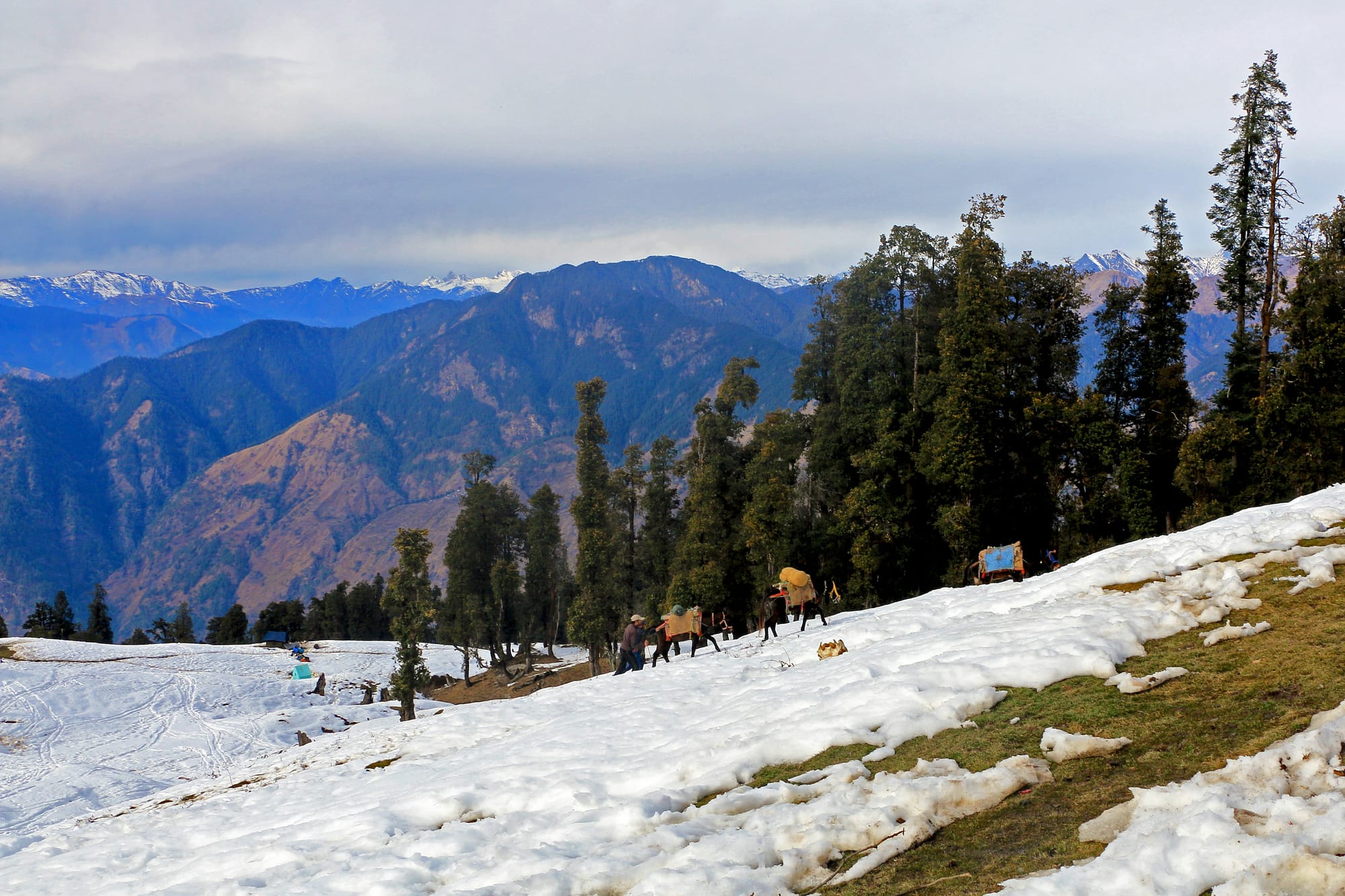
Choose Kedarkantha if you want to complete a Himalayan summit on your first winter trek. The route begins at Sankri and passes through pine forests, campsites and open snow-covered slopes before the final climb to the summit.
- Location and base camp: Uttarkashi district; Sankri
- Difficulty: Easy to moderate
- Duration: Around 5–6 days, including travel
- Trek distance: Approximately 20 km
- Highest altitude: Around 3,800 m
- Best winter months: December to March
- Snow conditions: Snow usually settles on the upper trail from late December. January and February generally have deeper snow, but conditions vary each year.
- Keep in mind: The summit climb is steep and often begins before sunrise. Ice, strong wind and holiday crowds can make the trek harder.
Brahmatal Trek, Uttarakhand

Brahmatal is a good choice if you care more about the journey than reaching a single summit. Its forest trails, long ridge walks and views of Mt Trishul and Nanda Ghunti give you something different on each day of the trek.
- Location and base camp: Chamoli district; Lohajung
- Difficulty: Easy to moderate
- Duration: Around 5–6 days, including travel
- Trek distance: Approximately 21–24 km, depending on the route
- Highest altitude: Around 3,734 m
- Best winter months: December to February
- Snow conditions: Snow becomes more likely from late December. Brahmatal and Bekaltal may freeze during colder periods, but a frozen lake is not guaranteed.
- Keep in mind: The exposed ridge can be windy, while ice and fresh snow can slow the climb. Nights around the higher camps are cold.
Dayara Bugyal Trek, Uttarakhand

Choose Dayara Bugyal if you want a gentler introduction to snow trekking. The trail climbs gradually through forest before opening onto broad alpine meadows that often turn into large snowfields during peak winter.
- Location and base camp: Uttarkashi district; Raithal or Barsu
- Difficulty: Easy to moderate
- Duration: Around 4–6 days, including travel
- Trek distance: Approximately 21 km
- Highest altitude: Around 3,600 m, depending on the route
- Best winter months: Late December to February
- Snow conditions: Early December may have little or no snow. The chances improve from late December, especially after fresh snowfall.
- Keep in mind: The meadows are exposed to cold wind and changing weather. Deep snow can make an otherwise gentle trail physically demanding.
Kuari Pass Trek, Uttarakhand
Kuari Pass suits trekkers who want broad views of the Garhwal Himalayas. The route passes through oak forests and open ridges, with clear views of peaks such as Nanda Devi and Dronagiri when the weather allows.
- Location and base camp: Chamoli district; routes commonly begin near Karchi or Dhak
- Difficulty: Moderate
- Duration: Around 4–6 days, including travel
- Trek distance: Approximately 20 km on the shorter route
- Highest altitude: Around 3,815 m
- Best winter months: December to February
- Snow conditions: Snow is common on the upper forest and ridge sections during peak winter. Heavy snowfall may prevent groups from reaching the pass.
- Keep in mind: The climbs are longer than they appear on paper. Snow, ice and sudden weather changes may force guides to shorten or change the route.
Triund Trek, Himachal Pradesh
Triund works well when you want a winter trek but only have one or two days. The climb from Dharamkot or McLeod Ganj is short compared with the Uttarakhand treks, yet it opens directly towards the Dhauladhar range.
- Location and base camp: Kangra district; Dharamkot or McLeod Ganj
- Difficulty: Easy in dry weather; more demanding in snow
- Duration: 1–2 days
- Trek distance: Approximately 18 km return
- Highest altitude: Around 2,842 m
- Best winter months: December to February
- Snow conditions: January usually offers the best chance of snow. Snow cover is less reliable than on longer, higher-altitude treks and can melt quickly.
- Keep in mind: The final climb can become icy, and the weather changes quickly near the ridge. Check current access and camping rules before leaving.
Best Months for Winter Trekking in India
December to February is the main season for winter trekking in India. November offers clearer trails with limited snow, while January and February give you a better chance of walking through settled snow. Your choice should depend on whether you prefer easier trail conditions or a stronger snow experience.
Winter Treks in November
November suits trekkers who want cold weather and clear mountain views without walking through deep snow. Most trails remain easier to follow, although nights at higher camps can already fall below freezing.
Recommended treks:
- Kuari Pass
- Dayara Bugyal
- Kedarkantha
Why choose November: The trails are usually drier, the skies are often clearer and winter crowds have not yet arrived. Choose another month if snow is the main reason for your trip.
Best Treks in December in India
Trekking in December gives you the first proper feel of Himalayan winter, but snow conditions vary across the month. Early December may bring dry trails and frost, while fresh snowfall becomes more likely towards the end of the month.
Recommended treks:
- Kedarkantha
- Brahmatal
- Dayara Bugyal
- Kuari Pass
- Triund
Why choose December: It offers a balance between manageable trail conditions and the possibility of snow. Kedarkantha and Brahmatal are good choices for longer trips, while Triund works for a short December trek.
Late December is also a busy period. Book transport and accommodation early if you plan to travel around Christmas or New Year.
Best Treks in January in India
January is the better choice if walking through snow is your priority. Snow usually begins to settle across the higher sections, but colder temperatures and icy trails make each trek more demanding.
Recommended treks:
- Kedarkantha
- Brahmatal
- Dayara Bugyal
- Kuari Pass
- Triund
Why choose January: Kedarkantha offers a snow-covered summit climb, Brahmatal combines snowy forests with frozen-lake views, and Dayara Bugyal opens onto broad snowfields. Kuari Pass also offers long snow sections, although heavy snowfall can sometimes block the route.
Choose January only if you are prepared for freezing nights, slower walking and weather-related changes.
Winter Treks in February
February usually has established snow at higher altitudes and slightly longer days than January. It is a practical month for trekkers who want snow but would prefer to avoid the late-December holiday rush.
Recommended treks:
- Brahmatal
- Kedarkantha
- Dayara Bugyal
- Kuari Pass
Why choose February: Snow from January often remains on the upper trails, while clearer weather windows may make the trek easier to plan. Lower trails can begin to lose snow later in the month, especially after several sunny days.
Triund can also be considered, but its snow cover is less predictable because of its lower altitude.
Snowfall cannot be guaranteed in any month. Check recent weather, road access and trail reports before confirming your trek.
Essential Packing List for a Winter Trek
The right winter trekking gear should keep you warm without making your backpack unnecessarily heavy. Pack in layers, keep essential items waterproof and confirm which technical equipment your trek operator provides before you leave.
Warm Layers and Trekking Clothes
- One pair of thermals: Wear them at higher camps and during cold nights.
- Two or three quick-dry T-shirts: They manage sweat better than cotton and dry quickly.
- One warm sweater: Use it as your first insulating layer.
- Two fleece jackets: Add or remove them as the temperature changes.
- One padded jacket: Carry a well-insulated jacket for campsites and freezing conditions.
- One waterproof outer layer: It protects your warm layers from snow, rain and wind.
- Two quick-dry trekking pants: Avoid jeans and cotton trousers because they become heavy when wet.
- Warm clothes for sleeping: Keep one dry set reserved for the night.
You may need four or five upper-body layers at higher camps. Do not wear every layer while climbing unless the conditions require it, as trapped sweat can make you colder later.
Trekking Shoes and Socks
- Water-resistant trekking shoes: Choose shoes with strong grip and enough room for warm socks.
- Three pairs of trekking socks: Carry at least two quick-dry pairs and one warm woollen pair.
- Waterproof socks: These help when snow begins to enter or melt inside your shoes.
- Gaiters: They prevent loose snow from entering through the top of your shoes.
- Microspikes: Use them on packed snow or ice when advised by your guide.
Break in your trekking shoes before the trip. A new pair can cause blisters within the first few hours.
Backpack and Rain Protection
- A 50–60 litre backpack: This is usually enough when you are carrying your own clothes and equipment.
- A smaller daypack: Use one if your main luggage is being transported separately.
- Rain cover: It protects the outside of the backpack from snow and light rain.
- Waterproof inner liner: Use a liner or reusable waterproof bags because a rain cover alone may not keep everything dry.
Winter Trekking Accessories
- UV-protection sunglasses: Snow reflects sunlight and can damage your eyes.
- Sun cap: It protects your face and neck during exposed daytime walks.
- Woollen cap or balaclava: Use it to cover your head, ears and face in cold wind.
- Waterproof gloves: They keep your hands dry while handling snow.
- Warm inner gloves: Wear them beneath waterproof gloves for insulation.
- Headlamp: It keeps both hands free during early starts or after-dark walks.
- Trekking pole: It improves balance on snow, ice and steep descents.
- Rain jacket and waterproof pants: They provide better protection than a jacket alone.
- Reusable hand warmers: These are optional but useful for people who struggle with cold fingers.
Carry spare batteries for your headlamp. Cold weather can drain batteries faster than expected.
Toiletries and Skin Protection
- Broad-spectrum sunscreen: Apply it to exposed skin even when the weather is cloudy.
- Lip balm: Use one with sun protection to prevent dry and cracked lips.
- Moisturiser: Cold air and wind can dry the skin quickly.
- Toothbrush and toothpaste: Carry travel-sized packs.
- Small microfibre towel: It dries faster and takes less space.
- Toilet paper: Carry it in a waterproof bag.
- Reusable waste bag: Bring all personal and non-biodegradable waste back with you.
Avoid wet wipes unless you can carry every used wipe back. Most wet wipes do not break down naturally.
Medicines, Documents and Emergency Items
- Personal prescription medicines: Carry enough for the entire trip, with a small reserve.
- Basic first-aid supplies: Include blister treatment, bandages and any items recommended by your doctor or trek operator.
- Government-issued identification: Keep the original and a digital copy.
- Permits and booking details: Download copies before reaching areas with poor connectivity.
- Trekking insurance: Check that the policy covers the altitude and emergency evacuation.
- Power bank: Keep it insulated from the cold when possible.
- Emergency contact details: Carry a written copy rather than relying only on your phone.
How to Choose the Right Winter Trek
Start with your available days, fitness level and experience in cold weather. Then consider the difficulty, travel time and likelihood of snow. The right trek is not necessarily the most popular one; it is the one you can complete safely and enjoy at a comfortable pace.
SearchSpot.ai helps you plan a winter trek around your personal preferences and constraints. Add your travel dates, budget, fitness level, trip length and preferred difficulty to receive recommendations suited to your plan.
Turn this research into a real trip plan
SearchSpot helps you compare stays, routes, neighborhoods, and decision tradeoffs in one planning flow so you can move from reading to booking with more confidence.