
Sweden Northern Lights: Why Abisko Beats Kiruna for Most First-Time Trips
A Sweden northern lights trip gets easier once you stop treating every Lapland base as interchangeable and choose between Abisko and Kiruna on purpose.

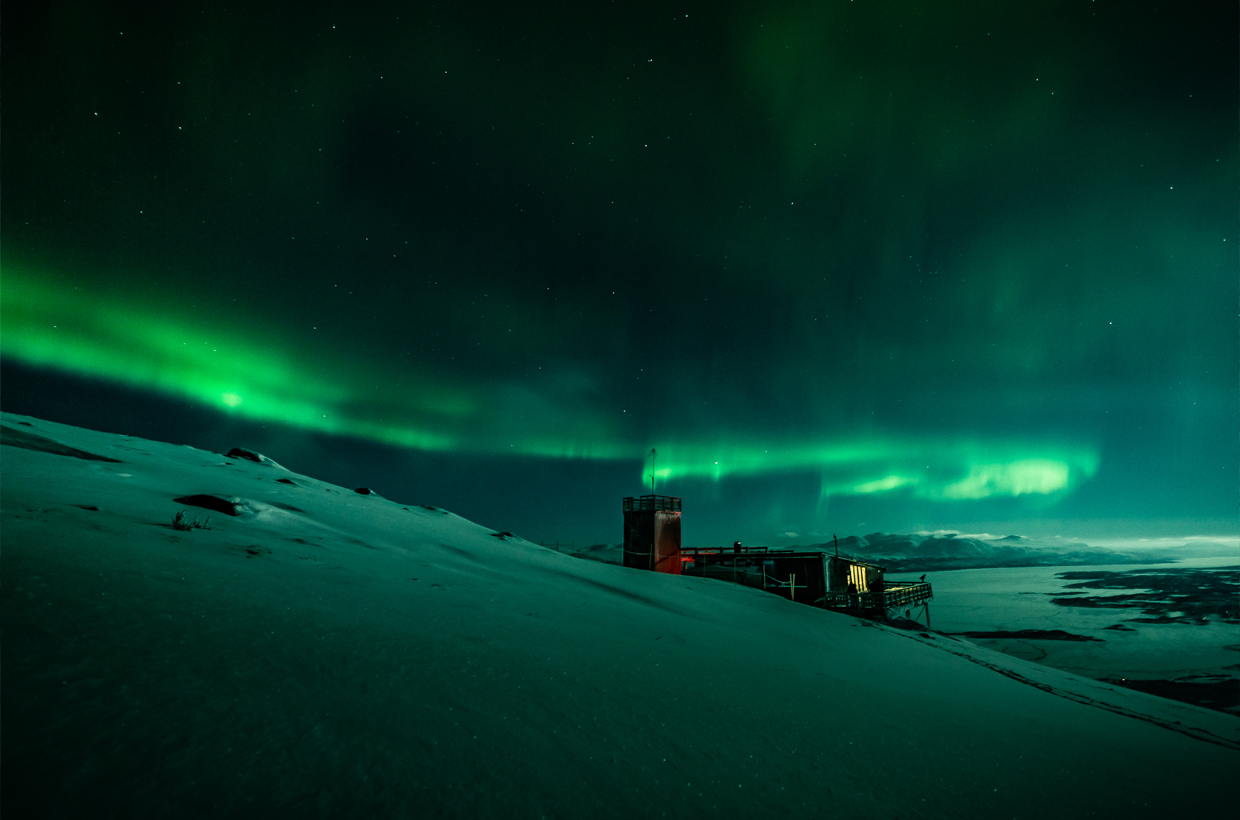
Most Sweden northern lights planning fails in a very specific way. Travelers decide on “Swedish Lapland” as if that is a single base, then only later realize they were really choosing between a clearer-sky aurora strategy and a broader Arctic city trip. Those are not the same thing.
If the northern lights are the whole point, Abisko is the better base than Kiruna for most first-time travelers. If you want a broader winter trip with more services and more day-activity variety, Kiruna becomes the easier compromise.
The short answer
| Decision | Best call | Why |
|---|---|---|
| Best first-time aurora base | Abisko | Its reputation is built on clear-sky odds and aurora-focused infrastructure. |
| Best base for a broader winter trip | Kiruna | You get more urban comfort, easier add-ons, and a bigger activity menu. |
| Best season | September through early April | That is the official viewing season window across northern Sweden guidance. |
| How many nights | 4 nights minimum | You need margin for clouds and for one weak aurora night. |
Why Abisko keeps rising to the top
Swedish tourism sources keep circling the same advantage: Abisko is not just far north, it is known for unusual clear-sky conditions. That is the whole point. A northern lights trip is never only about geomagnetic activity. It is about finding darkness and clear sky at the same time.
That is why Abisko repeatedly beats more convenient alternatives in serious aurora planning. The region's “blue hole” reputation and rain-shadow effect are what make the place useful, not just famous. Kiruna is not a bad base. It just solves a slightly different problem.
Kiruna is better if you want the Icehotel nearby, more tour variety, and more of a conventional Arctic city feel. Abisko is better if your only honest metric is, “Which base gives me the cleaner aurora trip?”
Abisko vs Kiruna, the real tradeoff
Choose Abisko if:
- You care most about aurora odds and sky quality
- You are fine with a smaller, more specialized base
- You want the trip to feel built around the night
Choose Kiruna if:
- You want a broader winter itinerary with more services
- You are combining the aurora with the Icehotel or other regional activities
- You prefer a hub feel and do not mind sacrificing some sky specialization
What I would not do is stay in Kiruna while telling yourself it is functionally the same as Abisko for aurora purposes. It is not. It can still be the right decision, but only when you want the broader trip more than the narrower sky edge.
Plan your Sweden northern lights trip around the right base first
SearchSpot compares Abisko, Kiruna, season windows, and aurora logistics so your Sweden northern lights trip fits the reason you are actually going.
Plan your Sweden northern lights trip on SearchSpot
The season that makes the most sense
Official Sweden travel guidance puts the northern lights season at September through early April. That is the broad window. Within that window, what changes is the comfort level, the amount of daylight you keep, and how much winter machinery you want the trip to include.
The wrong mental model is “darkest equals best no matter what.” The better model is “dark enough, clear enough, and comfortable enough that I stay engaged for several nights.”
Aurora Sky Station and what to book ahead
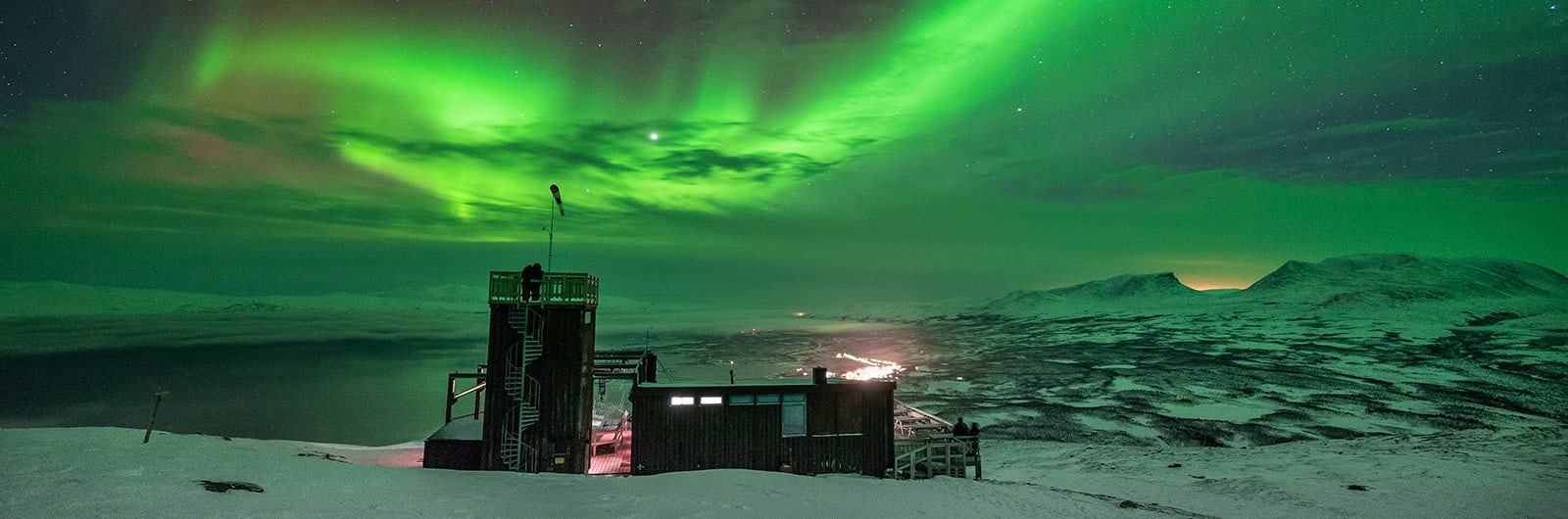
Abisko's most famous official aurora experience is the Aurora Sky Station, reached by a chairlift from STF Abisko Turiststation. The station sits on Mount Nuolja and is designed to turn the whole night into an event, not just a lookout. That is why you should book ahead instead of assuming you can improvise on arrival.
Current operator guidance routes evening Aurora Sky Station visits through guided experiences, and Visit Abisko publishes booking and cancellation terms rather than treating the activity like a casual walk-up. That is useful because it tells you this is a reserved product, not a vague maybe.
Abisko is also close enough to Kiruna that transfers are workable, but I would not build a first-timer aurora trip around frequent bouncing between the two. Pick the base that matches your goal and let the trip stay coherent.
How many nights you actually need
Book four nights. Three can work, but four is a more honest minimum if you are flying into northern Sweden primarily for the aurora.
A four-night stay gives you room for one cloudy night, one disappointing low-activity night, and still leaves enough runway for a win. That is the kind of margin worth paying for.
What travelers underestimate
1. Clear sky beats theoretical aurora hype
People obsess over solar apps and forget that clouds are often the real villain. Abisko's edge exists because weather matters.
2. Kiruna is easier to want, Abisko is easier to defend
Kiruna sounds broader and more flexible. Abisko is the sharper aurora choice. That is not a criticism of Kiruna. It is just the planning truth.
3. Sweden northern lights trips are better when you choose one identity
Either build a pure aurora trip or a broader Lapland winter trip. Trying to pretend both trip shapes have the same base usually creates a muddled itinerary.
The decision
For most first-time travelers, the smartest Sweden northern lights plan is Abisko for four nights, in the September to early-April season, with Aurora Sky Station or a similar guided night built into the stay.
Choose Kiruna only when you know you want the broader Arctic trip more than the strongest aurora-first setup. That is the honest split, and once you accept it, the rest of the trip gets much easier to book.
Need help deciding whether your Sweden trip should be Abisko-first or Kiruna-first?
SearchSpot cross-checks aurora odds, transfer friction, and trip shape so you can stop forcing one base to do everything.
Compare Sweden northern lights trip options on SearchSpot
Sources checked
Turn this research into a real trip plan
SearchSpot helps you compare stays, routes, neighborhoods, and decision tradeoffs in one planning flow so you can move from reading to booking with more confidence.