
Ginzan Onsen Yamagata: How to Get There, Best Season, and Whether a Day Trip Is a Mistake
Ginzan Onsen Yamagata looks like a dream, but the trip only works if you respect the bus timing, overnight logic, and seasonal trade-offs. This is the route plan that does not waste the town.

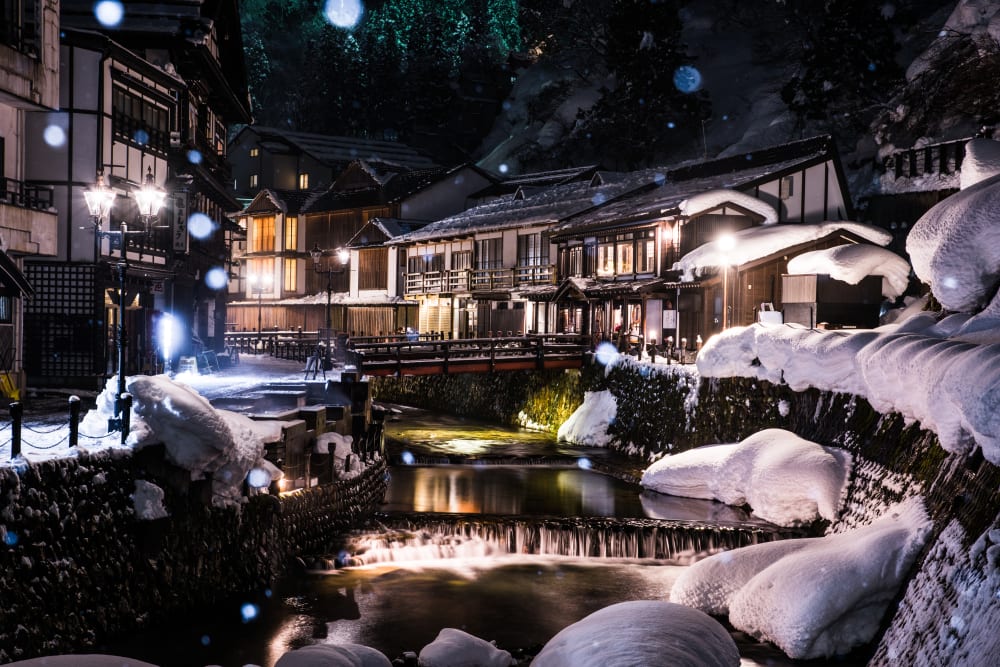
Ginzan Onsen Yamagata is one of the easiest places in Japan to romanticize badly. The photos are extraordinary, the gas lamps do exactly what they are supposed to do, and the Taisho-era riverfront looks like it was designed to make urban travelers say yes too early. The problem is that people then plan it like a casual stop, not a fragile rural onsen stay with limited access windows and a very specific payoff.
If you are planning around Ginzan Onsen Yamagata, the first question is not whether it is beautiful. It is whether you are giving the town the right kind of time. My short answer is simple: do not go all the way there for a rushed daytime dip if what you really want is the lantern-lit evening atmosphere. That is the whole point.
| Trip shape | Best move | Why |
|---|---|---|
| First visit, atmosphere matters most | Stay one night in town | You get the evening walk, the morning calm, and the ryokan rhythm. |
| Winter photo trip or slower rural route | Stay two nights if budget allows | You buy flexibility around weather and bus timing. |
| Already in Yamagata, time short | Day trip only if you accept the compromise | You can see the town, but miss the strongest version of it. |
| Tokyo round trip in one day | Usually skip | The transit burden is too high for the quality of the payoff. |
Why the day-trip logic usually fails
JNTO, Japan-guide, and Yamagata’s official tourism materials all point to the same structural fact: Ginzan Onsen is accessed through Oishida Station plus a local bus connection. JNTO notes the bus ride from Oishida takes about 35 minutes and that departures are only every 60 to 90 minutes. Japan-guide and local tourism pages also stress the compact, pedestrianized center and the value of the evening atmosphere.
That means the trip is not especially difficult, but it is sensitive. Once you add shinkansen timing, the bus, and the reality that the best part of Ginzan is the dusk-to-evening mood, the rushed version quickly starts to look wasteful. You can absolutely visit by day, walk the river, see the waterfall and old mine entrance, and leave. But if the reason you came is the dreamlike townscape, then the right move is to stay overnight.
Ginzan is tiny. That is not a weakness. It is the whole charm. But tiny places need the right tempo.
Plan your Ginzan Onsen Yamagata trip without fragile transfer math
SearchSpot compares train timing, overnight trade-offs, and rural route choices so your Ginzan plan still works when real logistics arrive.
Plan your Ginzan Onsen trip on SearchSpot
How to get there without turning the detour into punishment
The cleanest route from Tokyo is the Yamagata Shinkansen to Oishida Station, then the local bus into Ginzan Onsen. JNTO puts the shinkansen journey at roughly three hours and twenty minutes, with the bus at about 35 minutes after that. Yamagata tourism also highlights a direct airport bus option, but for most international visitors starting from Tokyo, Oishida remains the obvious access point.
The important practical point is not just travel time. It is connection spacing. When buses run every 60 to 90 minutes, a small delay or casual transfer plan can cost you a meaningful chunk of the day. That is another reason the overnight stays make more sense. They absorb the friction instead of magnifying it.
I would not overcomplicate arrival day. Get there, check in, soak, walk the town after dusk, and stop trying to prove how much you can fit into one rural stop.
Best season for Ginzan Onsen Yamagata
Winter is the postcard version, and there is no point pretending otherwise. Snow on the wooden ryokan, warm lighting on the river, and people walking in yukata is the image most travelers are actually buying. If that image matters to you most, winter wins.
But winter is also the version with the highest demand and the least forgiving flexibility. Snow deepens the atmosphere, but it can limit movement beyond the central streets and make a short trip feel more brittle if your timing slips.
The greener months are less iconic, but they are calmer and easier to inhabit. You still get the historic architecture, the footbaths, the waterfall at the back of town, and the slower rural mood. For travelers who care more about the old-world town than the exact snowy look, shoulder season is the smarter trade.
Where to stay inside Ginzan Onsen
If your budget allows it, stay in the riverfront core. That is the version that delivers the classic Ginzan feeling people imagine when they search for it. The town center is pedestrian-only, which helps the atmosphere immediately.
If the central ryokan are full or too expensive, an edge-of-town stay can still work, but only if you are honest about what you are sacrificing. The trade is clear: better availability, sometimes better value, slightly weaker immersion. For many travelers that is still a good deal. What matters is not pretending both versions are identical.
I would choose the most central option available within reason for a first visit, especially if the whole point is the evening walk.
What is actually worth doing there
Do not overbuild the activity list. Ginzan is about sequence and atmosphere more than quantity.
- Walk the riverfront in daylight once, then again after dark.
- Use the footbaths and give yourself time to slow down.
- Walk to Shirogane Falls and the old silver mine entrance when conditions allow.
- Eat dinner at the ryokan if you are staying, because that is part of the logic of being there.
The town rewards repetition. One quiet second walk often does more for the trip than adding a totally different attraction elsewhere.
What people get wrong
- They try to do Ginzan from Tokyo as if it were Nikko or Kamakura.
- They chase the winter look but refuse the overnight that actually unlocks it.
- They underestimate the bus spacing from Oishida.
- They assume a place this photogenic must also need a packed sightseeing list.
My recommendation
If you are planning around Ginzan Onsen Yamagata, stay one night minimum and two if this is a winter trip or a slower rural Japan segment. Use the Oishida shinkansen connection, arrive with buffer, and let the town be small. That is the right use of Ginzan.
If you only have a day and are already in Yamagata Prefecture, a day trip is defensible. From Tokyo, it is usually too much motion for too little atmosphere. Ginzan is worth the effort when you let the evening happen properly.
How to pack the stop so Ginzan still feels elegant
Ginzan usually works best when you treat it like a small overnight, not like another major city transfer. The Oishida connection is straightforward, but the town itself rewards light luggage, patient arrival, and a willingness to leave dead time in the schedule. If you are carrying large cases through a longer Tohoku route, this is one of those stops where separating out one overnight bag makes the whole experience feel calmer.
The same logic applies to pacing. You do not need to prove the trip was worthwhile by stuffing nearby sights into the same afternoon. Ginzan is tiny, and that is the point. Check in, walk the street in daylight, soak before dinner, then go back out once the lamps come on. That evening rhythm is what people remember. The town gets stronger when your to-do list gets smaller.
If you are unsure whether the detour is too much, use this test: Ginzan makes sense when you want atmosphere, ryokan time, and a rural night that feels visually distinct from the rest of your Japan route. If you mostly want another sightseeing checklist, this is the wrong stop.
If you book Ginzan, commit to the smallness of it. Eat where your ryokan or the town naturally points you, keep the evening open, and do not panic if the checklist feels short. The absence of pressure is part of why the overnight works.
That restraint is the real luxury here, and it is what separates a memorable Ginzan night from a rushed photo stop.
FAQ
Can you visit Ginzan Onsen Yamagata as a day trip from Tokyo?
You can, but it is usually a compromised version of the experience. The transit is long enough that overnight stays make far more sense for first-time visitors.
How do you get to Ginzan Onsen from Tokyo?
The standard route is the Yamagata Shinkansen to Oishida Station, then the local bus to Ginzan Onsen.
Is winter the best time to visit?
Winter is the most iconic season. It is the best choice if the snow-lit atmosphere is the main reason for the trip, but it also demands more flexibility and earlier booking.
Sources checked
Last checked: March 31, 2026
Want the rural route around Ginzan to feel cleaner before you book?
SearchSpot helps you compare station access, overnight pacing, and nearby add-ons so the detour stays elegant instead of fragile.
Build your Ginzan Onsen route on SearchSpot
Turn this research into a real trip plan
SearchSpot helps you compare stays, routes, neighborhoods, and decision tradeoffs in one planning flow so you can move from reading to booking with more confidence.