
Cycling in the Dolomites: Corvara vs Canazei, Best Month, and Which Passes Are Actually Worth Your Week
Cycling in the Dolomites works best when your base, month, and pass choices line up. Compare Corvara, Canazei, and Cortina before you book.


Cycling in the Dolomites gets sold as if the whole trip is one long postcard. That is the trap. The roads really are beautiful, the passes really are iconic, and the climbing really is good enough to justify a dedicated cycling week. But trips here go wrong when riders treat the Dolomites like a bucket-list collage instead of a mountain system with real tradeoffs.
The friction usually comes from three places at once: the wrong base, the wrong month, and too many famous passes packed into the same week. Once those stack up, the holiday becomes expensive logistics with a lot of scenic suffering attached.
My direct view is this: for a first road-focused Dolomites trip, base in Corvara or wider Alta Badia, go in late June or early September if you can, and build the week around one Sellaronda-style day, one bigger pass day, one medium day, and one genuinely lighter day. The Dolomites reward rhythm much more than they reward greed.
Cycling in the Dolomites, the short answer
| Decision | Best call | Why |
|---|---|---|
| Best first base | Corvara or wider Alta Badia | You get the cleanest access to the Sella group, the Maratona roads, and several different ride lengths without constant transfer friction. |
| Best months | Late June, early July, or early September | You usually get strong road access and long daylight without the full peak-season traffic pressure. |
| Best trip shape | Four ride days plus one lighter reset day | The high passes hit harder than their kilometer count suggests, especially if weather changes fast. |
| Best for | Road riders who want consecutive iconic pass days | The Dolomites are strongest when the trip is about road climbing and base efficiency, not city pairing. |
Why the Dolomites work so well for road cycling
The core advantage is density. In many mountain regions, one famous climb means a transfer day or a very specific hotel location. In the Dolomites, a smart base gives you several signature roads in one radius. Alta Badia openly positions itself as a launch point for road cycling in the heart of the Dolomites, and that is the practical truth of the region. You can build a real week here without moving hotels every night.
The second advantage is route variety inside the same mountain identity. One day can be a relatively compact loop around the Sella massif. Another can be a much heavier pass combination with more altitude and sharper late-day fatigue. You do not need six different hotel towns to make the week feel varied.
The third advantage is that the region already thinks like a cycling destination. Events such as Sellaronda Bike Day and Dolomites Bike Day are not just nice extras. They are evidence that the road network, the resort towns, and the tourism machine already understand cyclists as a core summer traveler, not as a side note after hiking season.
The best month depends on whether you want certainty or atmosphere
Late June is the best balance for most riders
If you want one clean recommendation, late June is the strongest answer. The mountain roads are usually in play, the long daylight makes big loops realistic, and the summer cycling calendar is already active. The tradeoff is simple: you still need weather flexibility. This is still high mountain terrain, and a bright valley morning does not guarantee a warm pass two hours later.
Early July has energy, but more pressure
Early July works very well if you want the area fully alive. Hotels, lifts, cafes, and support businesses are in summer rhythm. The downside is that you are now closer to the peak of demand, which means more traffic, more cyclists, and a little less margin for a quiet road-first feeling.
Early September is the calm enthusiast pick
If your schedule allows it, early September is the choice I would defend hardest for experienced riders who do not need school-holiday timing. You still get good riding conditions, but the whole region often feels more breathable. It is easier to get the trip back into a road-cycling register rather than a general alpine holiday register.
What I would not do is book a first Dolomites week too early in the season and assume every iconic road will behave like summer. You might get lucky. You might also spend money to stare at forecasts and road notices.
The best base is Corvara, unless your week has a very specific bias
Corvara and Alta Badia are the safest answer
Corvara is the least complicated recommendation because it keeps the classic Dolomites road-cycling week coherent. You are close to Campolongo, Gardena, Sella, and Pordoi, which means the trip does not need a heroic early roll-out every single morning. That matters more than many riders admit before arrival.
If your goal is to ride the famous roads that already shape events such as the Maratona dles Dolomites, Alta Badia is the base that lets those rides feel properly central rather than bolted on. This is the difference between staying somewhere scenic and staying somewhere operationally right.
Canazei is better if the week is heavily Sella focused
Canazei is a good call if you already know the trip is going to lean hard into the Sella group and surrounding passes. It works well for riders who want to wake up closer to Pordoi and Sella and who do not mind a slightly narrower route personality for the week.
The tradeoff is that Canazei is a little less forgiving if you want the trip to keep flexing in different directions. It is excellent for a focused climbing camp. It is not my first answer for a balanced first Dolomites holiday.
Cortina is the scenic detour, not the default
Cortina d'Ampezzo is where people get seduced by the wider alpine holiday package. It is beautiful, polished, and completely justified if the trip is part cycling, part high-end mountain town break. But if the point is road cycling first, it is usually less efficient than Alta Badia. Cortina makes more sense when the week is built around Giau, Falzarego, Valparola, and a broader Dolomites itinerary, not when you want the cleanest repeat access to the classic Sella roads.
Plan your Dolomites cycling trip with cleaner base and route decisions
SearchSpot compares passes, base towns, and trip logistics so your Dolomites week works on the road, not just in the itinerary draft.
Plan your Dolomites cycling trip on SearchSpot
Which rides deserve your week
1. A Sella loop day, because it teaches you the region fast
If you only do one signature ride, make it a Sella circuit style day. It is the best introduction to how the Dolomites actually ride: sustained climbing, constant visual payoff, and an unusual feeling of moving from pass to pass without losing the identity of the day.
This is also why Alta Badia is so hard to beat as a base. The ride makes sense from there. From the wrong town, the same famous loop becomes a lot more admin.
2. One bigger statement day, not three
The smartest Dolomites week has one day where you willingly spend your matches. That can be a bigger Maratona-inspired route, a Giau and Falzarego combination, or a longer pass chain that turns the day into a genuine objective. But one is usually enough. Riders get themselves into trouble when every day tries to be the defining day.
3. One medium day that still feels alpine
The medium day is where good trips separate from loud ones. You still want climbing, still want drama, still want the sense that you came to the Dolomites for a reason. You just do not need another all-day summit collection. That medium day is what keeps the week feeling deliberate rather than compulsive.
4. One actual easier day
Most riders lie to themselves here. They call it an easier day, then book four hours and 2,000 meters anyway. That is not a lighter day. In the Dolomites, an easier day should feel almost annoyingly restrained when you write it down. That is how you know it will save the rest of the week.
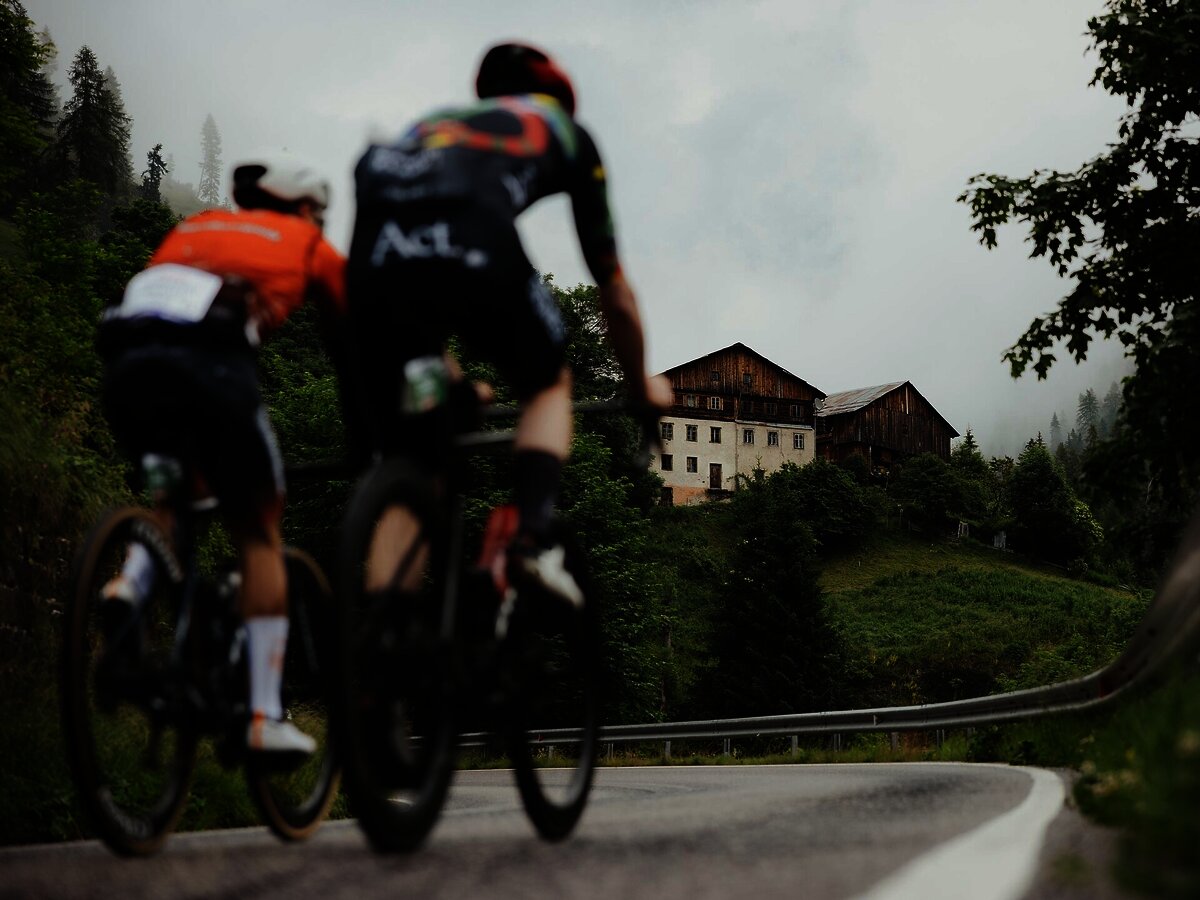
What riders usually get wrong
They stay somewhere beautiful but strategically weak
The wrong hotel town can make every ride start with a compromise. That is the fastest way to waste a premium mountain cycling trip.
They underestimate weather swings above 2,000 meters
You do not need to become paranoid about mountain weather, but you do need respect for it. Arm warmers, a real gilet, and a willingness to change the order of rides are part of the format here.
They confuse iconic with mandatory
The Dolomites are full of roads you could ride. That does not mean all of them belong in one trip. A week with four well-shaped rides beats a week with seven famous names and one tired memory.
They treat the trip like a continuous event
The region hosts famous events. Your holiday does not need to imitate one every day. If you ride the trip at event intensity from breakfast onward, you are usually paying a lot to become worse at decision-making by day three.
My recommendation
Cycling in the Dolomites is absolutely worth the effort, but only when the week has enough structure to let the mountains stay enjoyable. For most riders, that means basing in Corvara or wider Alta Badia, prioritizing late June or early September, and resisting the urge to turn every route into a badge collection exercise.
If you want the cleanest first trip, choose one classic Sella-based day, one larger pass day, one medium alpine loop, and one real recovery spin. That plan sounds less heroic on paper, and it works much better on the road.
The Dolomites stop being fun when ambition outruns logistics. Keep those aligned, and this is one of the best road-cycling holidays in Europe.
Need help choosing the right Dolomites base before the passes start choosing for you?
SearchSpot cross-checks road loops, hotel towns, and fatigue planning so you can lock a week that actually fits your riding level.
Compare Dolomites cycling bases on SearchSpot
Sources checked
- Alta Badia, cycling in the Dolomites
- Maratona dles Dolomites, official event overview
- Sellaronda Bike Day, official page
- Dolomites Bike Day, official page
Last checked: March 30, 2026
Turn this research into a real trip plan
SearchSpot helps you compare stays, routes, neighborhoods, and decision tradeoffs in one planning flow so you can move from reading to booking with more confidence.