
Chapel Ronchamp: The Right Base and Timing for a Le Corbusier Detour
Chapel Ronchamp rewards serious route planning. This guide shows the right base, timing, and visit logic for travelers building a Le Corbusier detour in eastern France.


Chapel Ronchamp becomes abstract very quickly if no one tells you how to route it. Architecture travelers know the building. What they usually do not know is whether it should be a day trip from Basel, a stop from Belfort, or a symbolic box-check on a wider France itinerary. That uncertainty is what turns a famous building into a clumsy travel day.
My recommendation is direct: plan Ronchamp as a deliberate eastern France detour with an early arrival, a nearby base, and enough slack to let the hilltop setting work on you. The wrong version is a heroic long-distance day built around the idea that one masterpiece can survive any logistics. It cannot.
| Decision | Best move | Why it works |
|---|---|---|
| Best base if the chapel is the point | Belfort or a nearby overnight | You protect the visit from becoming a transit endurance test. |
| Best broader base | Basel or Mulhouse for a larger design trip | You keep Ronchamp feasible without pretending Paris is local. |
| Common mistake | Treating it like a casual same-day add-on from far away | The building deserves a clear, quiet arrival. |
| Best mindset | One site, one hill, one slow chapter | Ronchamp is about atmosphere and approach as much as object-study. |
Why route logic matters so much here
Ronchamp works because of its solitude. The hill, the approach, the exterior massing, the shifting light inside, and the sense of removal are part of the architecture. If you arrive late, stressed, and mentally still on the train timetable, the chapel turns into an obligation instead of an encounter. That is why the travel logic matters more than many guidebooks admit.
The official and tourism guidance actually supports a calmer plan. The site is generally open throughout the year from 9:30 a.m. to 5:00 p.m., and the Ronchamp tourism guide says audio guides are available in several languages. It also notes that groups of more than 20 people must reserve in advance. Those details tell you something useful: this is a managed site with real visit structure, but it still favors individual travelers who arrive prepared and on time.
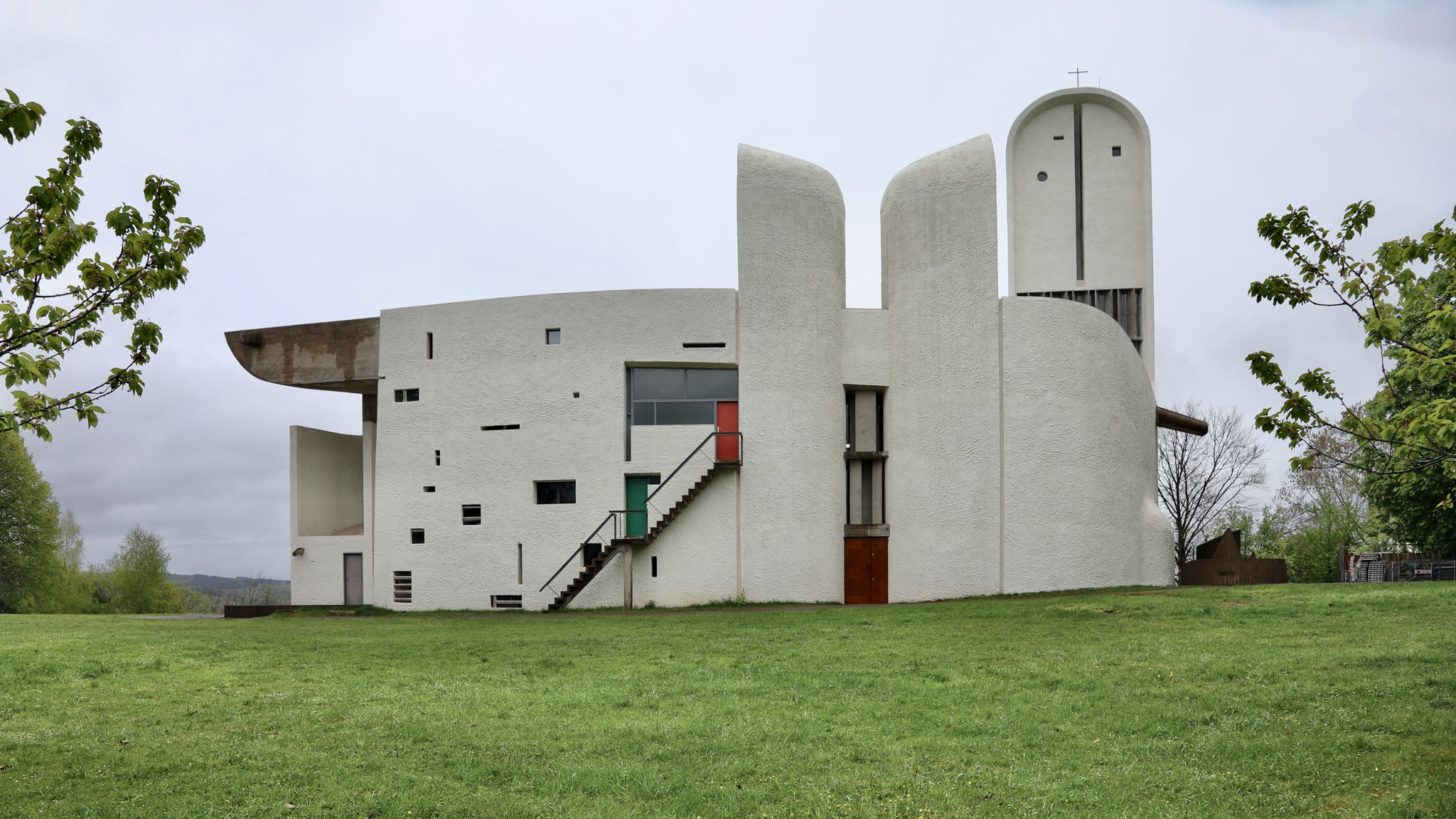
The base-city choice that makes sense
If Chapel Ronchamp is the main purpose of the detour, Belfort is the cleanest practical base because it keeps the visit compact and low-drama. If you are building a wider architecture trip through Switzerland, Alsace, or eastern France, then Basel or Mulhouse are more flexible bases. The mistake is assuming Paris is close enough for a relaxed architectural side trip. It is not the smart default.
What you are trying to buy here is mental clarity. Ronchamp benefits from arrival energy that is still intact. Once you lose that, the chapel can still impress you, but it stops feeling like the destination and starts feeling like the surviving fragment of a tired travel day.
Plan your Chapel Ronchamp detour with stronger route logic
SearchSpot compares base cities, transfer pressure, and architecture stop density so your Le Corbusier day feels intentional before you set off.
Plan your Chapel Ronchamp route on SearchSpot
What the current visit rules mean in practice
The tourism office currently lists the chapel as open year-round from 9:30 a.m. to 5:00 p.m., closed on December 25 and January 1. It also says audio guides are available in several languages, which makes solo visits much easier to structure. That means early or midday arrival is the obvious move. You do not need a hyper-optimized schedule. You just need to avoid turning up so late that the hill and the interior light collapse into one hurried loop.
The chapel is also still a spiritual site. The AONDH, which oversees the hill, presents it explicitly as a place where spiritual, cultural, and environmental dimensions meet. That matters because the correct behavior here is quieter and more attentive than at a typical museum stop. If you route the day too aggressively, you arrive in the wrong emotional register.
| Visit question | Current answer | Planning implication |
|---|---|---|
| General access | Open year-round, usually 9:30 a.m. to 5:00 p.m. | Earlier arrivals are much better than late reactive detours. |
| Closed dates | December 25 and January 1 | Holiday routing needs a backup plan. |
| Audio guides | Available in several languages | Solo travelers can still build a meaningful self-guided visit. |
| Large groups | Advance reservation required over 20 people | Group travelers need more admin than individual visitors. |
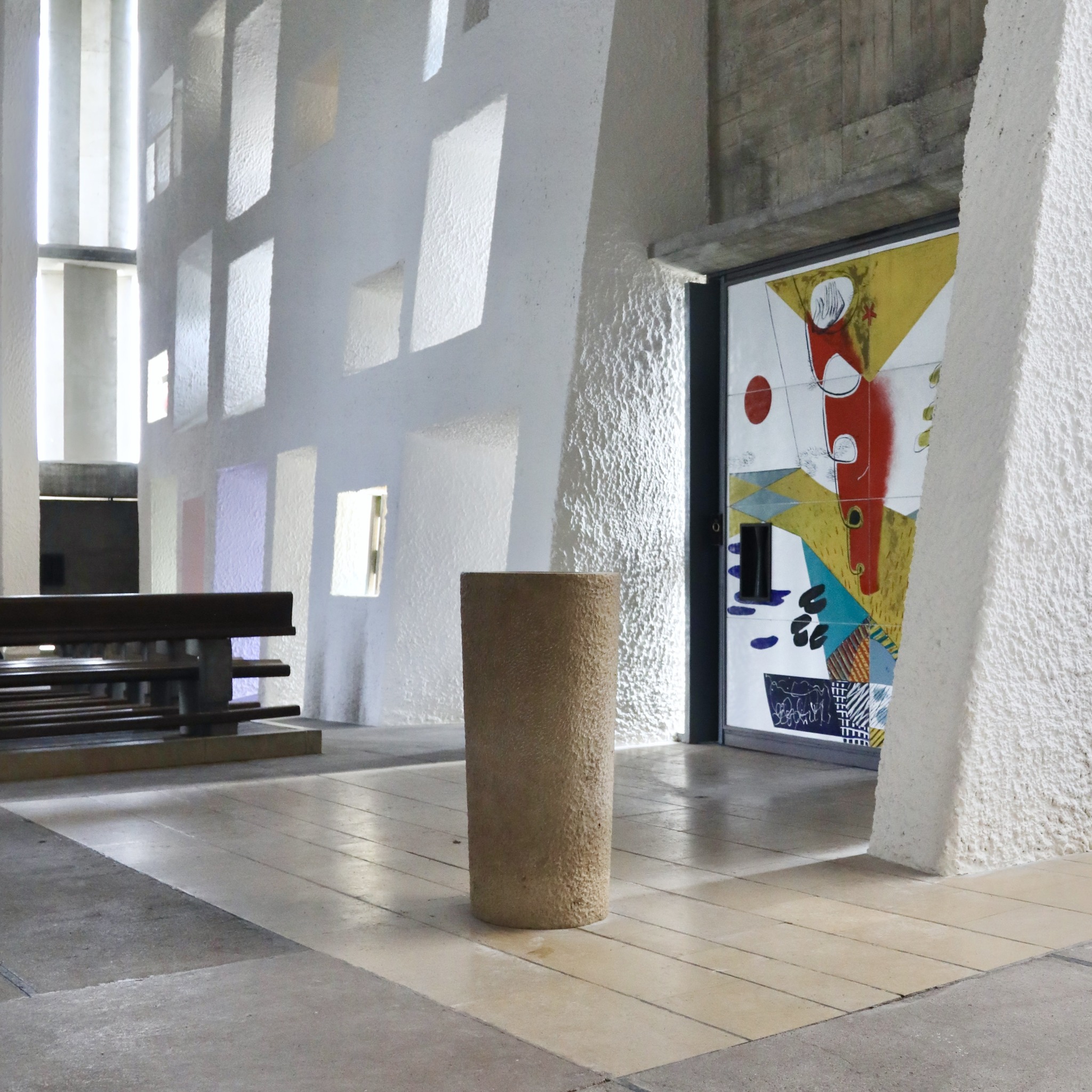
What architecture travelers usually get wrong
They overestimate how well masterpieces survive tired arrival energy
Ronchamp is powerful, but it is not magic. If you arrive depleted, the site becomes flatter.
They choose the wrong base for the wrong trip
Basel is good for a broader regional route. Belfort is better when Ronchamp is the point. Those are different trips.
They forget this is still a living religious place
That changes how you move, how long you stay, and what kind of pace suits the visit.
My recommendation
Give Chapel Ronchamp an early or midday arrival, base closer than your ego first suggests, and let the hilltop setting do part of the work. Choose Belfort for the cleanest practical detour, or Basel or Mulhouse if you are building a wider design route. The goal is not to prove you can squeeze Ronchamp in. The goal is to let it feel like a destination with shape.
That is the version of Ronchamp that feels like architecture travel, not pilgrimage-by-commute.
Need a route that makes eastern France architecture feel solvable?
SearchSpot compares base options, transfer burden, and stop sequencing so your Chapel Ronchamp detour still feels clear on the ground.
Build your Ronchamp trip on SearchSpot
Sources checked
- AONDH, Association Oeuvre Notre Dame du Haut
- Fondation Le Corbusier, Notre-Dame-du-Haut
- Ronchamp Tourisme practical guide PDF
Last checked: March 31, 2026
Turn this research into a real trip plan
SearchSpot helps you compare stays, routes, neighborhoods, and decision tradeoffs in one planning flow so you can move from reading to booking with more confidence.