
Bryce Canyon Stargazing: Best Base, New Moon Timing, and How Many Nights You Need
Bryce Canyon stargazing is better when you pick the right base, protect the dark nights, and give yourself enough evenings to survive a bad forecast.


A Bryce Canyon stargazing trip usually fails for one simple reason: people book the room first and the dark sky second. That flips the whole logic of the trip. One bright moon, one cloudy night, or one too-distant hotel can wipe out the part that mattered most.
If Bryce Canyon stargazing is the point, stay as close to the park as you can, target the new moon, and give yourself at least three nights. That is the structure that turns Bryce from a one-shot gamble into a real dark-sky trip.
The short answer
| Decision | Best call | Why |
|---|---|---|
| Where to stay | Inside the park first, Bryce Canyon City or Tropic second | You want the shortest drive before and after the best sky window. |
| Best moon phase | Week of the new moon, or the week before it | That is when Bryce feels closest to the trip people think they are buying. |
| How many nights | 3 nights minimum, 4 if the sky is the main reason | One bad weather night should not erase the trip. |
| Best official areas | Sunrise Point, Inspiration Point, Sunset Point, Paria View | They are easy to reach and repeatedly recommended by the park. |
Why Bryce is worth treating as the main event
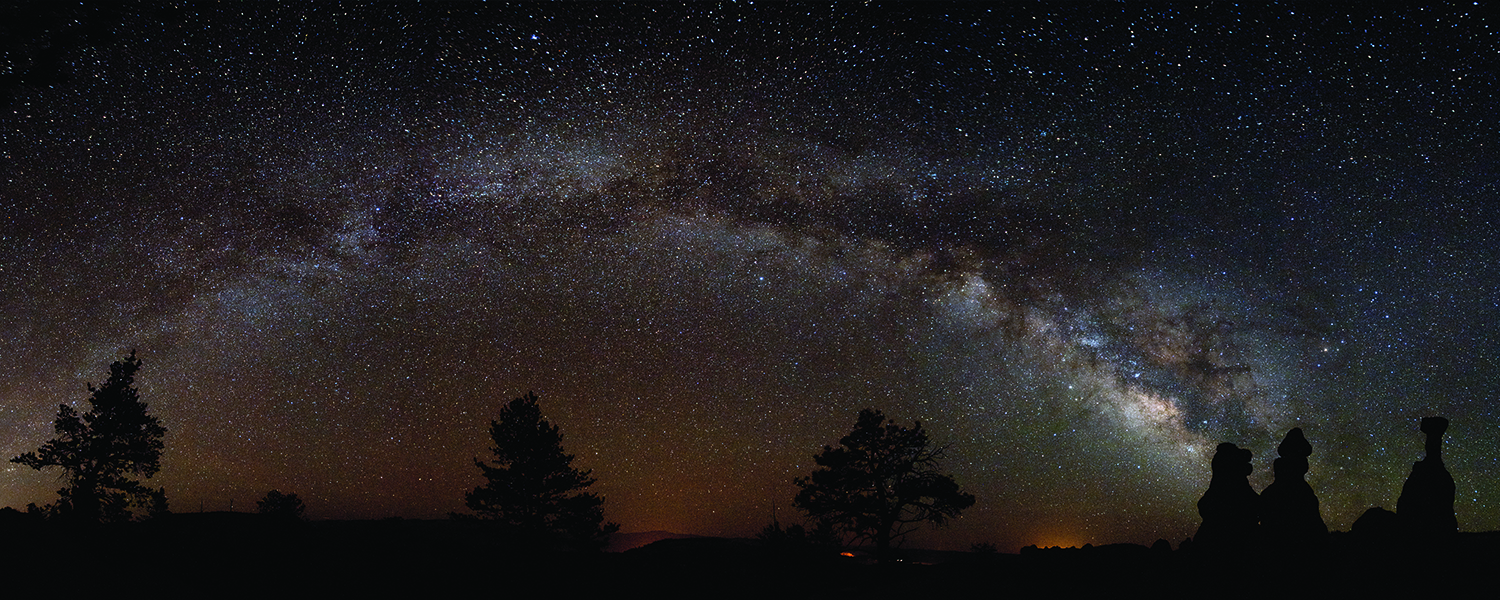
Bryce is not just a pretty national park that happens to look good after dark. The National Park Service keeps pointing to the same three advantages: high elevation, clean air, and distance from major population centers. Those are not brochure adjectives. They are the reason the sky feels fundamentally bigger here.
The park earned International Dark Sky status in 2019, and that is why Bryce deserves stricter planning than a casual one-night stop. If you are serious about the sky, Bryce should not be the leftover night on a Utah road trip. It should be one of the anchors.
The smartest base for Bryce Canyon stargazing
My first choice is in-park lodging or camping. Bryce Canyon Lodge and the park campgrounds keep you close to the viewpoints and the ranger programs. That matters because late-night astronomy trips are vulnerable to one thing people rarely budget for: the growing desire to leave early.
The park is also clear that reservations are not optional in spirit, even if they are not always impossible to find last minute. Campground reservations are required year-round, Sunset Campground runs on a rolling booking window, and lodge reservations are strongly recommended. That should tell you everything about how early serious travelers plan this trip.
If in-park options are gone, Bryce Canyon City or Tropic is the right fallback. Both keep you close enough that you still behave like a stargazer rather than like someone commuting back from a scenic stop. What I would not do is stay far away just because the nightly rate looks lower. Bryce Canyon stargazing is a late, cold, high-attention activity. A long return drive drains the best part of it.
Where to actually stargaze inside the park
The NPS says almost the entire park is good for stargazing. That is encouraging, but it is not specific enough for a first trip. For most people, the smartest starting lineup is Sunrise Point, Inspiration Point, Sunset Point, and Paria View.
Sunrise Point is the easy all-rounder. Inspiration Point gives you altitude and a bigger-sky feel with very little friction. Sunset Point is strong if you want to roll from dusk into full darkness without moving much. Paria View is useful when you want a slightly different rhythm from the main rim viewpoints.
Secondary options like Queen's Garden or the Navajo area can work, but I would not overcomplicate the first trip. Bryce does not need cleverness nearly as much as it needs good timing.
Plan your Bryce Canyon stargazing trip with better timing logic
SearchSpot compares moon phase, base options, and night-sky logistics so your Bryce Canyon stargazing trip is built around the nights that matter.
Plan your Bryce Canyon stargazing trip on SearchSpot
When to go, and what the calendar really needs to do
The safest rule is simple: build the trip around the new moon, then let everything else follow. Bryce and Utah tourism both point travelers toward the week of the new moon or the week before it. If the Milky Way and the sense of total darkness are what you care about, protect that window first.
If you also want programming, late spring through early fall is the easiest operating zone. Bryce runs astronomy programs seasonally, and the 2026 Astronomy Festival is scheduled for June 11 to June 13. Some festival activities require same-day sign-up, while the regular evening programs and telescope sessions are generally no-reservation experiences. That means the trip is easier than people fear, but only if you keep checking the live park calendar.
The point is not to chase every event. The point is to use programming as a bonus layer on top of a dark-moon trip that already works on its own.
How many nights you actually need
Three nights is the honest minimum. Four nights is better if Bryce is the main reason you came. Telescope programs can get cancelled for weather, and one bright or cloudy night can flatten the visual payoff. A three-night stay gives you room for one weak night and still lets the trip recover.
I would only do one night if Bryce Canyon stargazing is a bonus attached to something else. If the sky is the point, treat it like a weather-dependent objective and give it margin.
What people usually underestimate
1. The drive back matters
The late-night return is part of the astronomy plan. A distant room makes people quit early.
2. Moonlight can be beautiful and still be the wrong answer
Bright nights can still look dramatic, but they are not the version of Bryce most stargazers are flying in for.
3. Ranger programs help, but they are not the whole trip
Bryce is one of the rare parks where the self-guided night is already enough to justify the effort. That is why a cancelled program does not have to mean a failed trip.
The decision
If Bryce Canyon stargazing is the real goal, stay in the park if you can, fall back to Bryce Canyon City or Tropic if you must, and book the new-moon window for at least three nights.
That structure respects how astronomy travel actually works. It accepts that weather can wobble, that darkness matters more than wishful thinking, and that convenience after midnight is part of the product. Bryce rewards that seriousness.
Need a faster way to compare Bryce moon timing, lodging, and night-sky tradeoffs?
SearchSpot cross-checks trip timing, base choices, and dark-sky logic so you can stop second-guessing the structure of the trip.
Compare Bryce Canyon stargazing options on SearchSpot
Sources checked
- Bryce Canyon National Park, Night Skies
- Bryce Canyon National Park, Stargazing at Bryce Canyon
- Bryce Canyon National Park, Astronomy Programs
- Bryce Canyon National Park, Astronomy Festival 2026
- Bryce Canyon National Park, Permits and Reservations
- Visit Utah, Dark Skies of Bryce Canyon
- Bryce Canyon Country, Stargazing
Turn this research into a real trip plan
SearchSpot helps you compare stays, routes, neighborhoods, and decision tradeoffs in one planning flow so you can move from reading to booking with more confidence.