
Brutalist Architecture London: The Walkable Route That Works
A practical brutalist architecture London route that keeps the strongest public spaces together, explains what to book, and avoids the usual citywide zigzag.


London is one of the easiest cities in the world to romanticize badly. That is especially true when people plan a brutalist architecture London day. The internet gives you Trellick Tower, the Barbican, the National Theatre, Alexandra Road Estate, the Southbank complex, and three more things you do not actually have time to absorb. The result is predictable: a day spent underground on the Tube, emerging every hour to look at concrete for twelve minutes.
The smarter answer is simpler. For a first brutalist day in London, build the route around two public-access anchors, the Barbican and the South Bank, then decide whether you still have enough energy for one residential detour. That is how you get London brutalism as lived urban space instead of a scattershot image collection.
The short answer
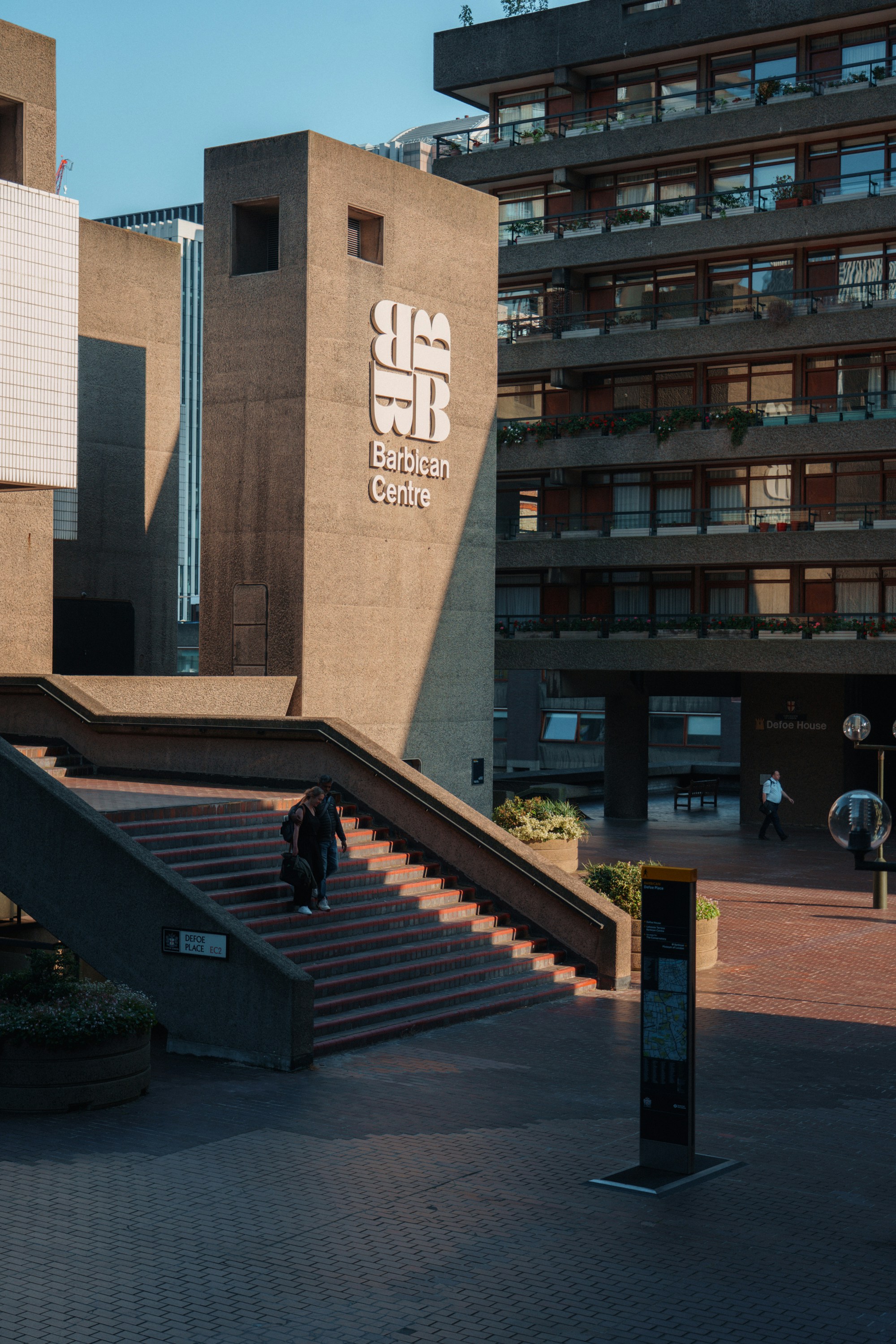
If this is your first pass through London brutalism, start with the Barbican, then move to the South Bank. Treat Alexandra Road Estate as the best optional housing detour if you still want more. Do not force Trellick Tower into the same day unless you specifically care about west-London residential brutalism more than route efficiency.
| Stop | Why it belongs | Access logic | How much time to give it |
|---|---|---|---|
| Barbican Centre and Estate | The strongest all-in-one introduction | Public spaces are easy to access, tours are bookable, Conservatory is limited and ticketed | 2 to 3 hours |
| Southbank Centre / Royal Festival Hall | Best second chapter for public brutalism | Free foyer access during venue hours | 1.5 to 2 hours |
| National Theatre exterior and public realm | Useful nearby continuation | Good as a read from the riverside and public circulation zones | 30 to 45 minutes |
| Alexandra Road Estate | Best extra if you want housing scale | Respectful exterior walk only | 60 to 90 minutes plus transit |
That structure gives you the best version of the city for a first brutalism day: dense, legible, and still physically realistic.
Why the Barbican should be first
The Barbican is where London brutalism becomes easiest to understand because it gives you building, circulation, housing, arts programming, landscape, and elevated walkways in one place. It is not just a single object. It is a whole argument about how a city should work. That is why it should come first.
The official opening information matters here. The Barbican’s public spaces run on broad daily access windows, the art and performance spaces follow their own schedules, and the dedicated architecture tours are bookable experiences rather than permanent drop-ins. That is helpful because it lets you choose your level of structure. If you want context, book the tour. If you want to self-guide, the estate still rewards you.
The special case is the Barbican Conservatory. It is not something to casually assume will be open. The official listings show it on specific free ticketed dates, with booking released in advance. If you want that greenhouse-inside-brutalism contrast, plan for it. If you do not get a slot, do not let the rest of the day fall apart over it.
Plan your architecture trip with better route logic
SearchSpot compares routes, neighborhoods, and site logistics so your architecture trip feels coherent before you step outside.
Plan your brutalist architecture London trip on SearchSpot
How to read the Barbican properly
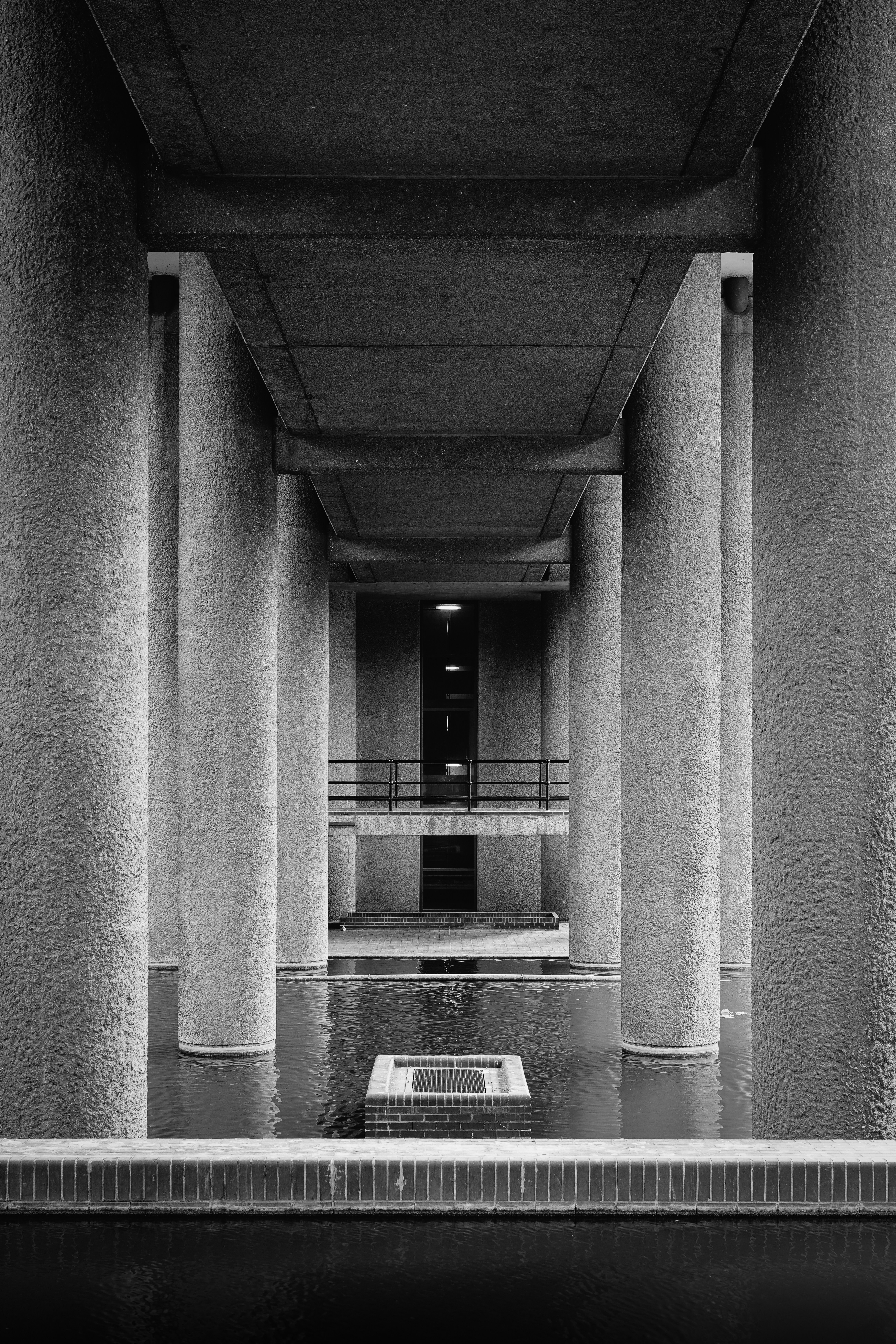
The mistake visitors make is moving too quickly. The Barbican is a place for repeated angles, level changes, and short pauses. Use the highwalks. Double back. Look at how the lake edge, terrace, stairs, bridges, and tower silhouettes are staged. Brutalism here is not only about mass. It is about choreographed movement.
If you have the timing, the best first visit order is:
- Arrive early enough that the estate still feels relatively calm.
- Walk the public spaces before you go inside anything.
- Use a booked architecture tour if you want the design and planning context spelled out.
- Add the Conservatory only if you successfully booked it and it fits the day cleanly.
This matters because the Barbican is the one place in London where overbooking is easy. People stack a tour, a gallery, lunch, and the Conservatory, then barely look at the actual estate. Reverse that. The estate is the point.
Why the South Bank is the right second chapter
The Southbank Centre and Royal Festival Hall are the ideal second chapter because they shift the conversation from enclave urbanism to public cultural frontage. The official venue information is clear that the foyers are openly accessible during venue hours, which makes the complex unusually friendly for architecture travelers who want to read space without constantly producing a ticket.
That is why the South Bank pairs so well with the Barbican. You spend the morning with one of London’s most complete postwar urban experiments, then you spend the afternoon on a riverside cultural strip where circulation, terraces, foyers, bridges, and public edge conditions become the main event.
I would keep the move simple: Royal Festival Hall first, then the riverside walk, then the National Theatre exterior and public realm. Do not complicate it with too many side stops unless you have a second day.
Where the National Theatre fits
The National Theatre is worth including, but with discipline. On a first day, it works best as an extension of the South Bank route, not as a separate architecture mission. Its value is contextual. It helps you read the river edge, the terrace logic, and the difference between civic brutalism and more self-contained residential brutalism. If you treat it as part of the South Bank chapter, it lands better.
What I would not do is cross the city for a dozen short concrete stops and then tell yourself the totality was more informative than these stronger clusters. It was not.
Alexandra Road Estate, the best optional detour
If you still want one more stop, make it Alexandra Road Estate. Not because it is central, but because it adds something the Barbican and South Bank do not: a serious residential brutalist landscape with a very different kind of urban ambition. The route cost is real, though, so this is an optional second-half move, not a requirement.
Handle it correctly. This is a lived-in place, not an open-air museum. Go for the exterior walk, the stepped section, the urban form, and the experience of the long concrete datum against the tracks and open space. Then leave respectfully. If that sounds less glamorous than tower hunting, good. It means you are finally planning like an architecture traveler instead of a collector.
What not to do on a first day
- Do not force the Barbican, South Bank, Alexandra Road, and Trellick Tower into one day.
- Do not assume the Conservatory is casually open just because you saw a photo of it.
- Do not treat every brutalist landmark as equally meaningful if the route between them destroys the day.
- Do not forget that public-access quality matters more than pure checklist length.
That last point matters most. London is full of buildings that are important in books and slightly disappointing in real travel conditions. The first route should favor places that still work when you arrive with a real body, a real weather forecast, and a real afternoon energy drop.
The decisive recommendation
The best brutalist architecture London day starts at the Barbican, moves to the South Bank, and only then asks whether you want a residential detour. That route gives you the strongest public-access brutalism in the city with the least wasted movement. It also keeps the architecture readable because each stop belongs to a clear chapter: urban experiment, civic culture, then optional housing.
If you try to cover all of London brutalism in one day, you will mostly cover transit. If you edit hard, London becomes much more generous.
Turn London brutalism into a coherent route
SearchSpot helps you compare stop density, transit drag, and neighborhood tradeoffs so your architecture day still makes sense after the second stop.
Build your London architecture route on SearchSpot
Sources checked
- Barbican official opening-hours, tours, and Conservatory pages
- Southbank Centre and Royal Festival Hall official venue pages
- Official listings for current Barbican architecture tours
Turn this research into a real trip plan
SearchSpot helps you compare stays, routes, neighborhoods, and decision tradeoffs in one planning flow so you can move from reading to booking with more confidence.