
Best AI Trip Planner 2026: 7 AI Travel Planning Tools Worth Trying
Compare the best AI trip planners in 2026, including SearchSpot, Mindtrip, Layla, Wonderplan, Wanderlog, ChatGPT and Gemini.


Planning a trip in 2026 no longer means opening 30 browser tabs, copying hotel names into spreadsheets, checking maps, and trying to figure out whether your itinerary is actually realistic.
AI trip planners can now turn a simple prompt into a personalized travel plan based on your destination, budget, interests, travel dates, and preferred travel style.
But there is an important difference between an AI tool that generates a nice-looking itinerary and one that actually helps you make better travel decisions.
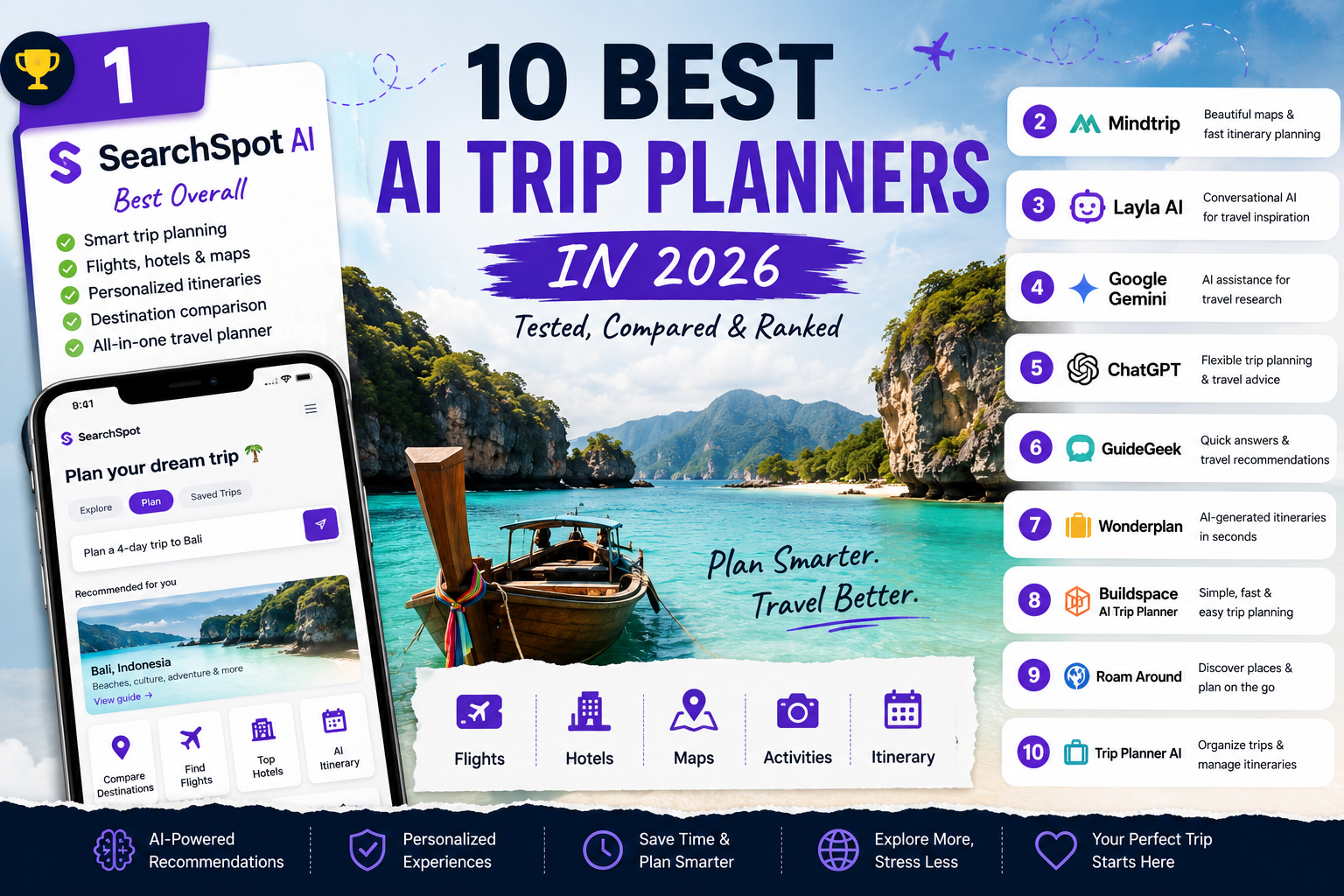
In this guide, we compare some of the best AI trip planners in 2026, including SearchSpot.ai, Mindtrip, Layla, Wonderplan, Wanderlog, and other AI-powered travel tools.
Quick Answer: What Is the Best AI Trip Planner in 2026?
There isn't one AI trip planner that is perfect for every traveler.
- Best for decision-focused planning: SearchSpot.ai
- Best for visual trip planning: Mindtrip
- Best for conversational travel planning: Layla
- Best for simple free itineraries: Wonderplan
- Best for organizing an existing trip: Wanderlog
- Best for general AI-powered research: ChatGPT or Gemini
The right choice depends on whether you need inspiration, itinerary generation, comparison, budgeting, organization, or a combination of all of them.
What Is an AI Trip Planner?
An AI trip planner is a travel planning tool that uses artificial intelligence to help you research and organize a trip.
Instead of manually searching for every part of your vacation, you can describe what you want in natural language.
For example:
“Plan a 7-day Japan trip for two people in October with a ₹2 lakh budget. We want food, culture, scenic places, and a relaxed pace.”
An AI trip planner can use those preferences to create a suggested itinerary.
Depending on the platform, it may help with:
- Destination recommendations
- Day-by-day itineraries
- Hotels and accommodation
- Restaurants
- Attractions
- Transportation
- Route planning
- Budget estimates
- Travel time
- Activities
- Neighborhood comparisons
- Trip organization
The biggest advantage is simple: AI can reduce the amount of research required to get from an idea to a workable trip plan.
Recent travel-planning tools are also moving beyond simple itinerary generation toward more interactive planning, comparison, and optimization. Research into agentic AI for trip planning is increasingly focused on handling multiple constraints rather than simply producing a list of destinations.
Why Use an AI Trip Planner in 2026?
Traditional trip planning can be surprisingly complicated.
You might need to research:
- Where to stay
- What to see
- How long to spend in each city
- How to travel between destinations
- Which attractions are close together
- How much the trip will cost
- Which restaurants fit your preferences
- What to book in advance
AI can bring many of these decisions into a single workflow.
1. Save Hours of Research
Instead of searching separately for “best hotels,” “things to do,” “restaurants,” and “3-day itinerary,” you can start with one detailed prompt.
2. Get More Personalized Recommendations
A good AI planner can consider preferences such as:
- Budget
- Travel dates
- Family or solo travel
- Food preferences
- Activity level
- Interests
- Accommodation preferences
- Travel pace
This makes the result more useful than a generic “top 10 things to do” article.
3. Build an Itinerary Quickly
AI can turn a destination into a rough day-by-day schedule within minutes.
For example:
Day 1: Arrival + neighborhood exploration
Day 2: Major attractions + local food
Day 3: Day trip
Day 4: Museums + shopping
Day 5: Relaxation + departure
You can then refine it.
4. Compare Different Options
The best AI travel tools aren't just itinerary generators.
They should help you answer questions like:
“Should I stay in Shibuya or Shinjuku?”
or:
“Is it worth spending two nights in Kyoto instead of Osaka?”
That decision-making layer can be more valuable than simply generating another itinerary.
7 Best AI Trip Planners in 2026
1. SearchSpot.ai — Best for Decision-Focused Trip Planning
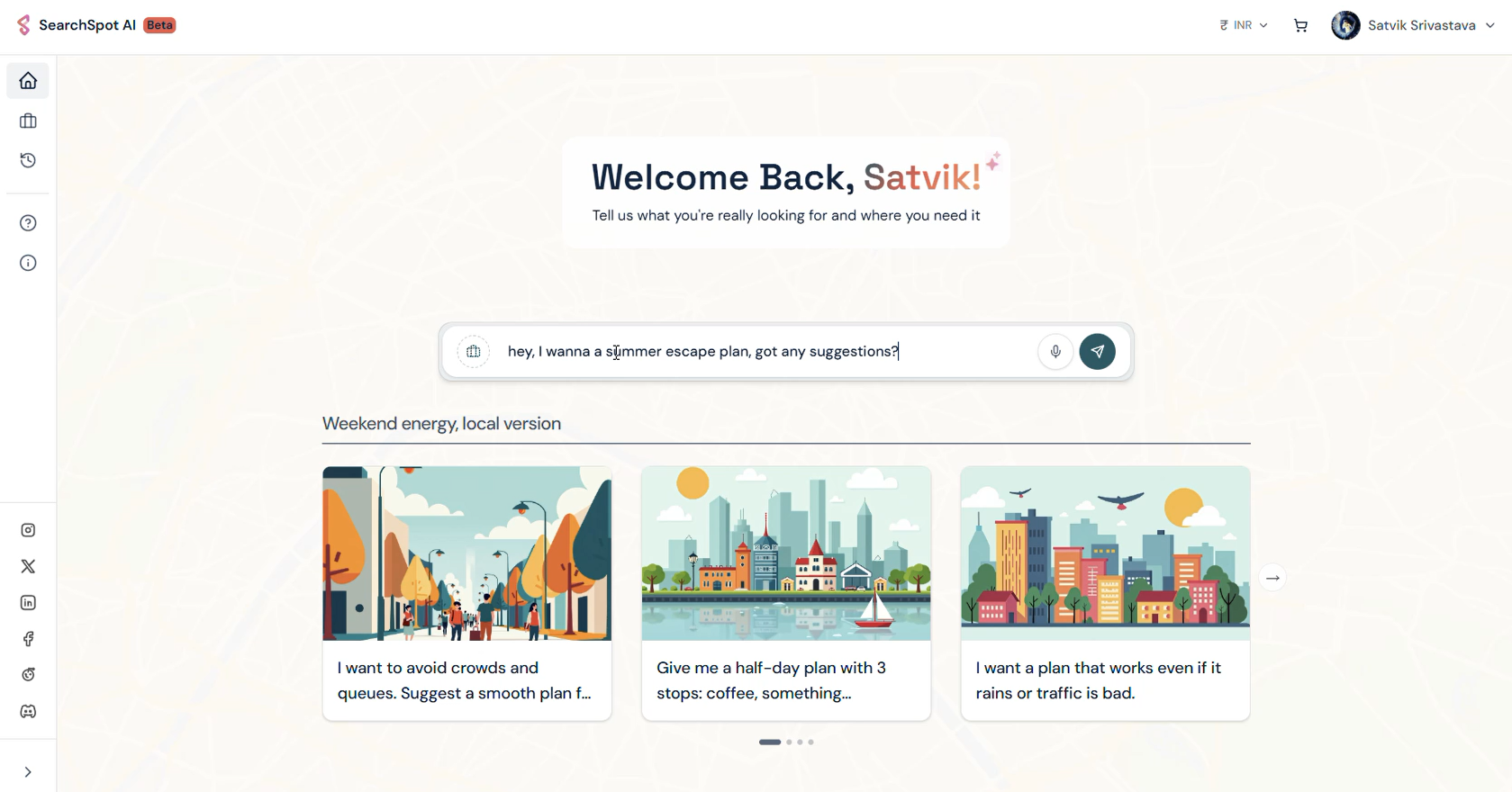
SearchSpot.ai is designed around a slightly different approach to AI travel planning.
Instead of simply producing a long list of places, the platform focuses on helping travelers research, compare, and narrow down their options.
This is particularly useful when you already know what kind of trip you want but don't know which option is best.
For example:
“I want a quiet hotel in Goa under ₹5,000 per night, close to cafes and beaches, with reliable Wi-Fi.”
Rather than giving you dozens of possibilities, a decision-focused travel assistant should help you understand which options fit your requirements and why.
Best features
- AI-powered travel research
- Personalized recommendations
- Option comparison
- Trip planning
- Destination research
- Budget-conscious recommendations
- Decision support
Best for
Travelers who don't just want an itinerary but want help choosing between travel options.
Potential limitation
As with any AI travel tool, recommendations should be verified before booking, especially when prices, availability, opening hours, or local conditions can change.
Our rating: 9/10
2. Mindtrip — Best for Visual Travel Planning
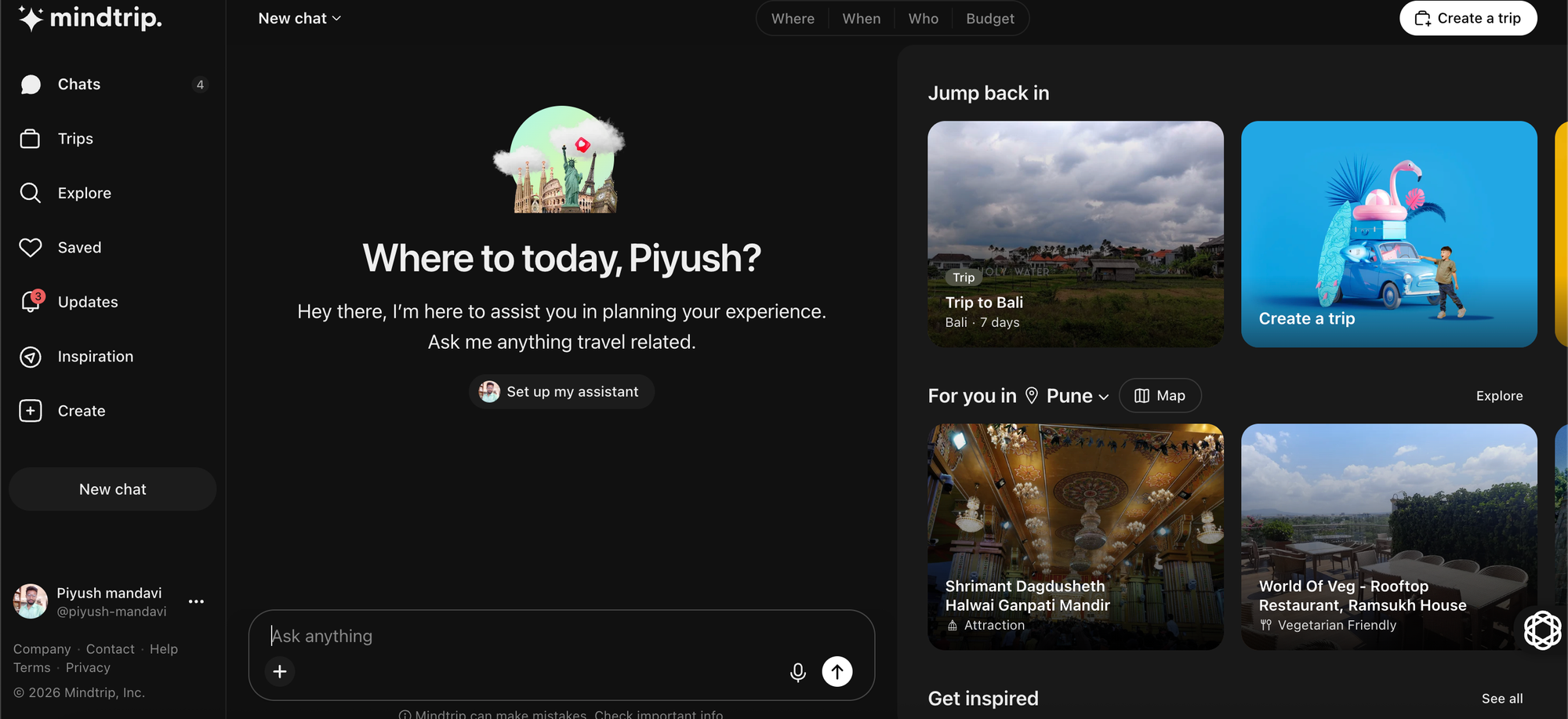
Mindtrip is particularly appealing if you like discovering destinations visually.
Its approach combines AI-powered travel planning with maps, places, and trip organization.
This makes it useful for travelers who want to browse destinations and build a trip around places they discover.
Best for
- Visual travelers
- Destination discovery
- Maps
- Organizing saved places
- Collaborative trip planning
Pros
- Attractive visual experience
- Useful mapping functionality
- Good for discovering places
- Helps organize trip ideas
Cons
- Can feel more discovery-focused than decision-focused
- You may still need additional research for specific travel constraints
Our rating: 8.8/10
3. Layla — Best Conversational AI Travel Planner
Layla takes a conversational approach to trip planning.
Instead of filling out complicated forms, you can describe the trip you want and interact with the AI to refine it.
For example:
“I have five days in Italy. I love food and history but don't want to move hotels every night.”
The conversational interface makes this approach particularly accessible for travelers who aren't sure where to start.
Best for
- Beginners
- Quick itinerary ideas
- Conversational planning
- Destination inspiration
Pros
- Easy to interact with
- Natural-language planning
- Good for generating initial itineraries
- Beginner-friendly
Cons
- Complex trips may require additional verification
- A generated itinerary isn't automatically a perfect real-world schedule
Our rating: 8.5/10
4. Wonderplan — Best for Simple AI Itineraries

Wonderplan is a straightforward option for travelers who want an AI-generated itinerary without making the process overly complicated.
Give it your destination and preferences and it can create a structured travel plan.
Best for
- Quick itineraries
- First-time AI travel planning
- Simple vacations
- Travelers looking for a lightweight tool
Pros
- Simple
- Easy to understand
- Fast itinerary generation
Cons
- Less suitable for highly complex travel decisions
- Generated recommendations still need checking
Our rating: 8/10
5. Wanderlog — Best for Organizing a Trip
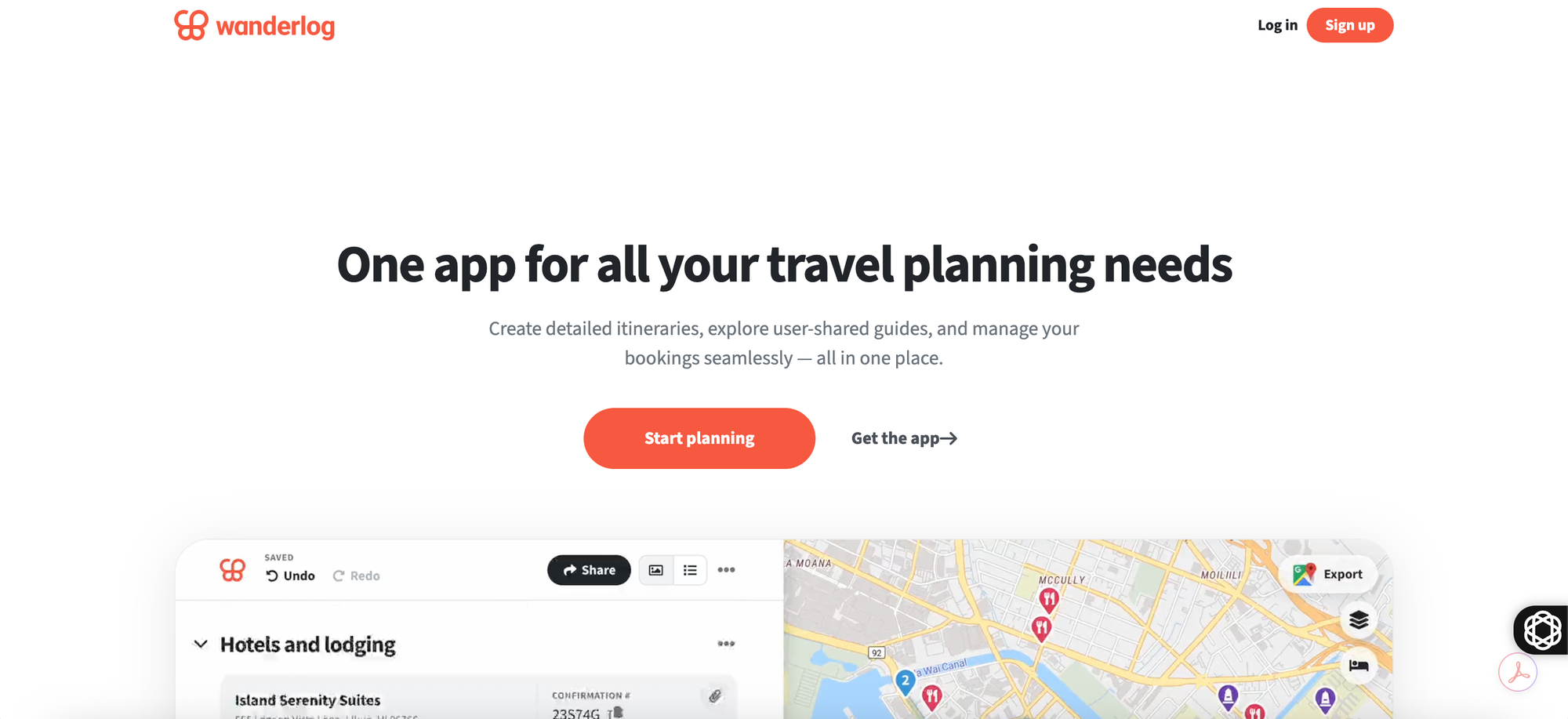
Wanderlog takes a slightly different approach.
Rather than being purely an AI itinerary generator, it works as a broader trip-organizing platform.
It can be useful once you've already started researching a trip and want to keep your bookings, destinations, and itinerary organized.
Best for
- Group trips
- Existing itineraries
- Trip organization
- Maps and route planning
Pros
- Strong organization features
- Useful for multi-person trips
- Good visual trip structure
Cons
- Less focused exclusively on AI
- You may need to do more of the initial research yourself
Our rating: 8.3/10
6. ChatGPT — Best General-Purpose AI Travel Assistant
General-purpose AI assistants can also be surprisingly useful for travel planning.
You can ask an AI chatbot to:
- Create an itinerary
- Compare destinations
- Explain transportation
- Build a budget
- Suggest restaurants
- Create packing lists
- Translate phrases
- Research travel requirements
The major advantage is flexibility.
You aren't restricted to a predefined travel-planning workflow.
For example:
“Plan a 10-day Japan trip for someone who has never visited Japan, doesn't like rushing, loves street food, and wants to keep the trip under ₹1.5 lakh excluding flights.”
The AI can then help structure the trip around those constraints.
Best for
- Flexible research
- Brainstorming
- Custom travel questions
- Complex conversations
Limitation
General AI assistants aren't necessarily specialized travel platforms, so you should independently verify time-sensitive details before making bookings.
Our rating: 8.5/10
7. Google Gemini — Best for Google Ecosystem Users
Google's AI ecosystem can also be useful for travel research and planning.
The biggest advantage is the potential integration between AI assistance and Google's broader ecosystem.
AI-powered travel planning is becoming increasingly personalized. In 2026, Google's AI products have demonstrated the ability to incorporate information from connected personal data such as calendars and emails when generating travel plans—although this also makes privacy and data-sharing considerations increasingly important.
Best for
- Google users
- Travel research
- Personalized planning
- General-purpose AI assistance
Potential limitation
The usefulness of the experience depends heavily on which Google services and features are available to you.
Our rating: 8.4/10
AI Trip Planner Comparison
| AI Trip Planner | Best For | Itinerary | Maps | AI Chat | Comparisons | Organization |
|---|---|---|---|---|---|---|
| SearchSpot.ai | Decision-focused planning | ✓ | ✓ | ✓ | ✓ | ✓ |
| Mindtrip | Visual discovery | ✓ | ✓ | ✓ | ✓ | ✓ |
| Layla | Conversational planning | ✓ | — | ✓ | ✓ | — |
| Wonderplan | Simple itineraries | ✓ | — | ✓ | — | — |
| Wanderlog | Trip organization | ✓ | ✓ | ✓ | ✓ | ✓ |
| ChatGPT | Flexible research | ✓ | Depends | ✓ | ✓ | Depends |
| Gemini | Google ecosystem | ✓ | ✓ | ✓ | ✓ | ✓ |
Features and availability can change, so check the individual platform before relying on a specific feature.
What Makes the Best AI Trip Planner?
Not all AI travel planners are equally useful.
Here are the features that matter most.
Personalization
A good planner should understand more than your destination.
It should consider:
- Budget
- Dates
- Interests
- Travel companions
- Pace
- Food preferences
- Accommodation preferences
A family trip and a backpacking trip to the same city should not produce the same itinerary.
Route Optimization
An itinerary isn't useful if you're constantly crossing the city.
A good plan should group nearby attractions together and account for realistic travel times.
This is one reason trip planning is more difficult than simply generating text. Research benchmarks have shown that AI systems can struggle when they have to satisfy multiple real-world travel constraints simultaneously.
Budget Awareness
The AI should understand the difference between:
“Plan me a luxury trip.”
and:
“Plan me a ₹1 lakh trip including hotels and local transportation.”
Budget changes almost every travel decision.
Realistic Scheduling
A good itinerary shouldn't schedule six major attractions in five hours.
Look for plans that account for:
- Opening hours
- Travel time
- Meal breaks
- Attraction duration
- Check-in/check-out
- Traffic
- Rest
Transparent Recommendations
One of the most useful improvements AI travel planners can make is explaining why a recommendation was selected.
For example:
Hotel A
- ₹4,500/night
- Near the beach
- Quiet neighborhood
- Strong Wi-Fi
- 15-minute walk to restaurants
That's more useful than:
“Here are 20 popular hotels in Goa.”
AI Trip Planners vs Traditional Travel Planning
Traditional planning gives you more control but requires more time.
AI planning gives you speed and personalization but requires verification.
| Traditional Planning | AI Trip Planning |
|---|---|
| Search manually | Ask in natural language |
| Open many tabs | One planning workflow |
| Compare options yourself | AI can shortlist options |
| Build itinerary manually | Generate itinerary automatically |
| Calculate travel time | AI can help structure routes |
| Research separately | Combine multiple requirements |
| More time-consuming | Much faster |
The best approach in 2026 isn't necessarily AI instead of research.
It's AI for the first draft + human verification before booking.
How to Use an AI Trip Planner Effectively
The quality of your output depends heavily on the quality of your prompt.
Instead of saying:
“Plan my trip to Japan.”
Give the AI more context.
Try:
“Plan a 10-day Japan trip for two people from October 10–20. Our budget is ₹2 lakh excluding international flights. We want Tokyo, Kyoto, and Osaka, but prefer a relaxed pace. We love Japanese food, temples, photography, and scenic train journeys. Avoid expensive luxury hotels and prioritize accommodation near public transportation.”
This gives the AI much more information to work with.
Include These 8 Things
- Destination
- Travel dates
- Number of travelers
- Budget
- Interests
- Travel pace
- Accommodation preferences
- Things you want to avoid
The more constraints you provide, the more useful your itinerary can become.
Can AI Really Replace a Travel Agent?
For simple trips, AI can handle a surprisingly large part of the research and planning process.
But it shouldn't completely replace human judgment.
AI can make mistakes.
Prices change.
Hotels sell out.
Flights get delayed.
Attractions change their opening hours.
Visa requirements can change.
Weather can disrupt plans.
So treat AI as a travel planning assistant, not an infallible travel agent.
For important details, verify information through official sources before booking.
The Future of AI Travel Planning
AI travel planning is moving beyond simple itinerary generation.
The next generation of travel assistants is increasingly focused on reasoning through constraints and adapting plans.
Imagine telling an AI:
“My flight arrives three hours late. Move today's activities without canceling the restaurant reservation.”
Instead of generating a new itinerary from scratch, the assistant could potentially reorganize the trip around the new constraint.
Research into agentic trip-planning systems is already exploring this direction, using specialized agents to reason about factors such as routes, transportation, and points of interest.
This could make future AI travel assistants less like itinerary generators and more like digital travel coordinators.
So, Which Is the Best AI Trip Planner in 2026?
The answer depends on what you're trying to accomplish.
Choose SearchSpot.ai if you want an AI assistant focused on researching and comparing travel options.
Choose Mindtrip if you prefer visual discovery and map-based planning.
Choose Layla if you want a conversational travel-planning experience.
Choose Wonderplan if you want a simple AI-generated itinerary.
Choose Wanderlog if organization and group trip planning are your priorities.
Choose ChatGPT or Gemini if you want a flexible AI assistant that can handle travel questions beyond itinerary generation.
Ultimately, the best AI trip planner isn't the one that generates the longest itinerary.
It's the one that helps you go from:
“I have no idea where to start”
to:
“I know where I'm going, what I'm doing, what it will cost, and why this plan makes sense.”
And that's where AI-powered travel planning is heading in 2026.
 Hiten Sethiya
 Hiten Sethiya
 Hiten Sethiya
 Hiten Sethiya
 Hiten Sethiya
Turn this research into a real trip plan
SearchSpot helps you compare stays, routes, neighborhoods, and decision tradeoffs in one planning flow so you can move from reading to booking with more confidence.